

Sometimes, neighborhoods need an extra dose of color to bring out the best aspects of their community, and it’s an amazing way for artists to find inspiration in blank walls and project something extraordinary with their vision. Murals can inspire people every day as they walk past them, reflecting inner beauty and meaning while adding a layer of otherworldliness. It’s what makes the streets feel extra alive.
In partnership with vitaminwater, Neighborhue is a series where artists take to the walls and expand their vision, exploring Latine neighborhoods in Brooklyn and, in this season, Orlando, giving new shine to the murals’ colors like a fresh bottle of vitaminwater straight out of the fridge. This year, we’re partnering up with visual creators who have made iconic murals and seeing how they expand their work by pushing their craft further than ever, taking vitaminwater with them to stay hydrated and inspired during the long days of painting under the sun. In turn, they engage with their communities to add new layers to their works, strengthening their relationships and giving the art a new lease of life.
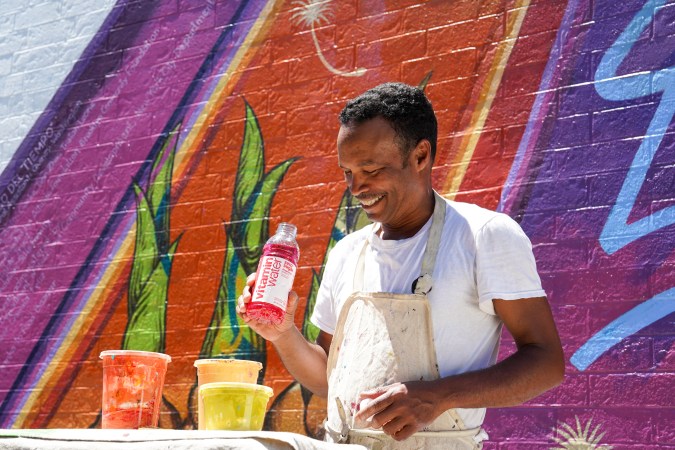
In this video, we meet Carlos Mateu and his work in Brooklyn, particularly a mural titled El Paso Del Tiempo. Mateu was born in Havana, Cuba, where he first studied painting, engraving, sculpture, drawing, and art history. In the process, he developed a style that he calls “pop geometric,” which combines graphic elements with realism to create visual effects aided by geometric forms. His subject matter includes symbolism, surrealism, and mysticism that reflects Afro-Cuban life and religion, his experience living in Cuba and the U.S. (where he has resided since 1997), and his personal perspective of the world around him. Mateu is also a dancer, and music is a great inspiration for his work. As part of the Groundswell collective—responsible for over 700 murals in New York—Mateu explores his personal vision within his Bushwick neighborhood, where color and form lead to his exploration of community within the art world, as well as the people around his block.
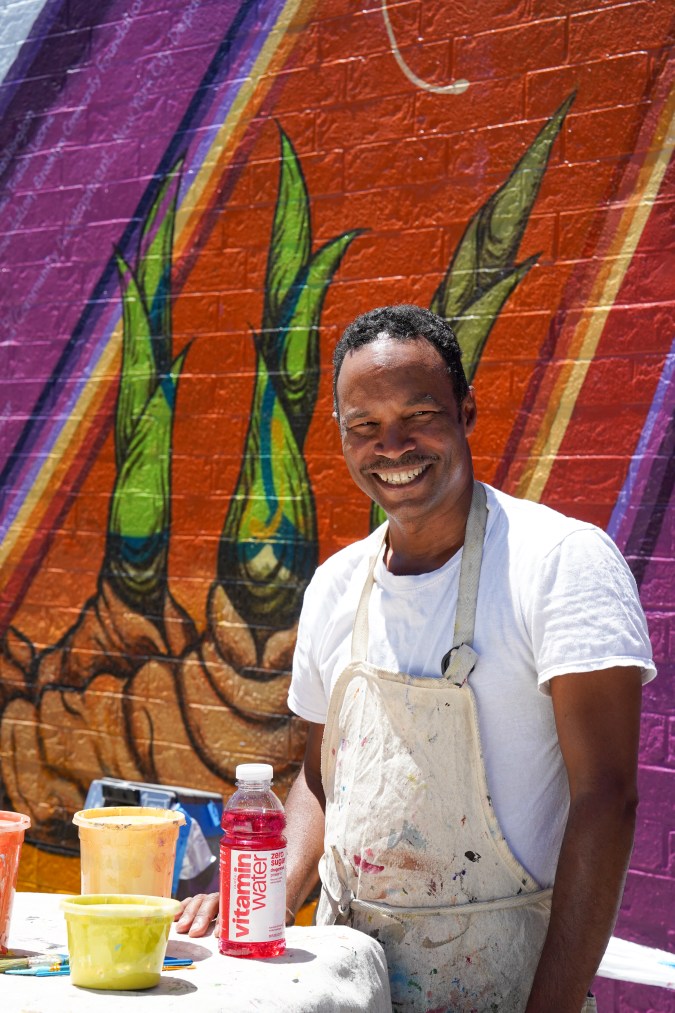
What’s the inspiration behind El Paso Del Tiempo?
“El paso del tiempo” is the major enemy. The only enemy is time. [laughs.] I have another painting called Killing Time because I was so frustrated about time. I was holding ideas, and I wasn’t sketching as much as I used to when I was younger. So I wanted to know where to go to turn off the time, come back, do everything I have to do, and go back and turn it on again. [laughs]. So, [in Killing Time], I appear with a bow and arrow, shooting numbers coming out of the clock. It’s also a tribute to life and death because they go together; it’s something that we have to carry with us. You have to clear the sky from dark clouds if you want to move forward. So there is a lot of symbolism [in El Paso Del Tiempo] about the past, present, and future. The mural represents different levels of dimension.
What do color and the visual elements of the mural mean to you? How does that affect you emotionally?
Well, as you can see, the strongest palette of color is orange and blue, and I love that combination of colors. There is a lot of symbolism in my personal work that is represented here; working with symbols is something I feel connected to. But mostly, I’m affected by the complexity of the mural; I was totally impressed by how we were able to accomplish this mural with the students. It’s all about teamwork.
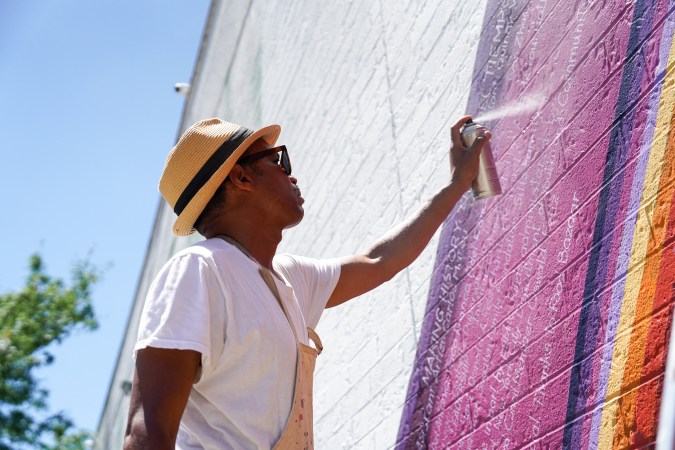
You made this mural while working with Groundswell. How did it come together?
This is my fourth year working for Groundswell, and this was my second mural as an assistant; Raul Ayala was the lead artist, and he has a lot of experience and is very skillful at leading a group. [I was used to] painting murals by myself, so after I joined Groundswell, I’ve been learning how to put the project together, like working with the students, interviewing the neighborhood, and that type of interaction. When you are working with 17 students, and all of them have different skills, you need to work together because this is not about us; this is superior. We have to be flexible, and we need to find a way to keep everyone busy according to their level and make it work.
Can you give us a brief introduction to Groundswell?
Groundswell is an organization that makes murals in Brooklyn, including this one. They’ve made over 700 murals in New York. I’ve been working with them for the last four years. I feel like I’m part of this family because their purpose is to make you feel comfortable and to support artists, so it’s not like any other regular job; they are here for us. So I feel very comfortable.
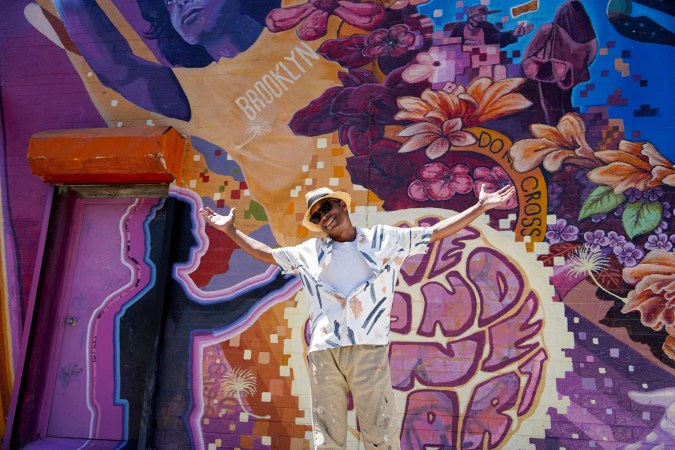
When you go back to work on a mural like that, what do you think people will take away from the new, expanded version?
It means that there is no “Paso del Tiempo” when they look at it. It’s still bright; it still has solid, strong, and bright colors. It’s not gonna fade or deteriorate because we are always here to renovate it and to make it look brand new.
Why is it important for you to bring in community members into this piece of work?
It’s important to bring community members into the piece because it’s a way of letting the neighbors know that we care about them. That we are watching them and what they are doing daily; that [they] are a visible part of a community and they are important.