
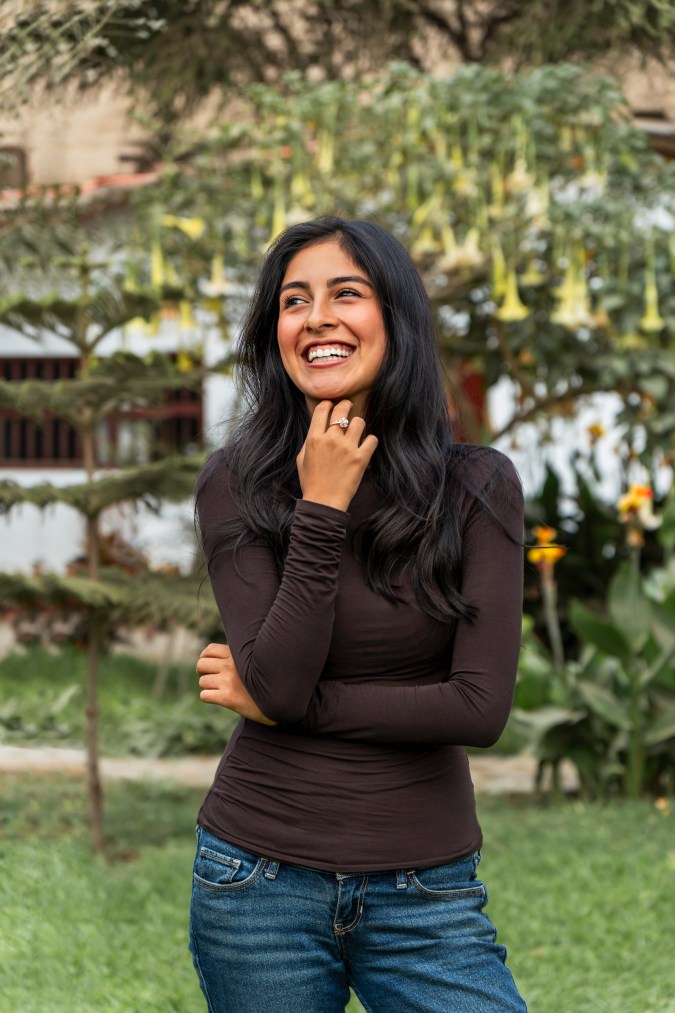
Estrella Salazar says yes before she has all the answers.
This isn’t a season or an era—it’s how Salazar has moved for as long as she can remember. Yes to moving countries. Yes to studying in the United States. Yes to majoring in communications and business. Yes to creating content. Yes to centering sports—especially fútbol. Yes to writing. (Honestly, the list could go on.)
Somewhere between teaching herself the U.S. college application process while in Peru, finding and building a chosen family at NYU, and becoming a beauty creator by accident, she built a life around following her curiosity wherever it leads.
“I’m kind of in a transitory phase where I’m taking my creativity more seriously—and not like a side quest,” she said. “My dream has always been to monetize what I’m doing so I’m able to live off the things that I love to do.”
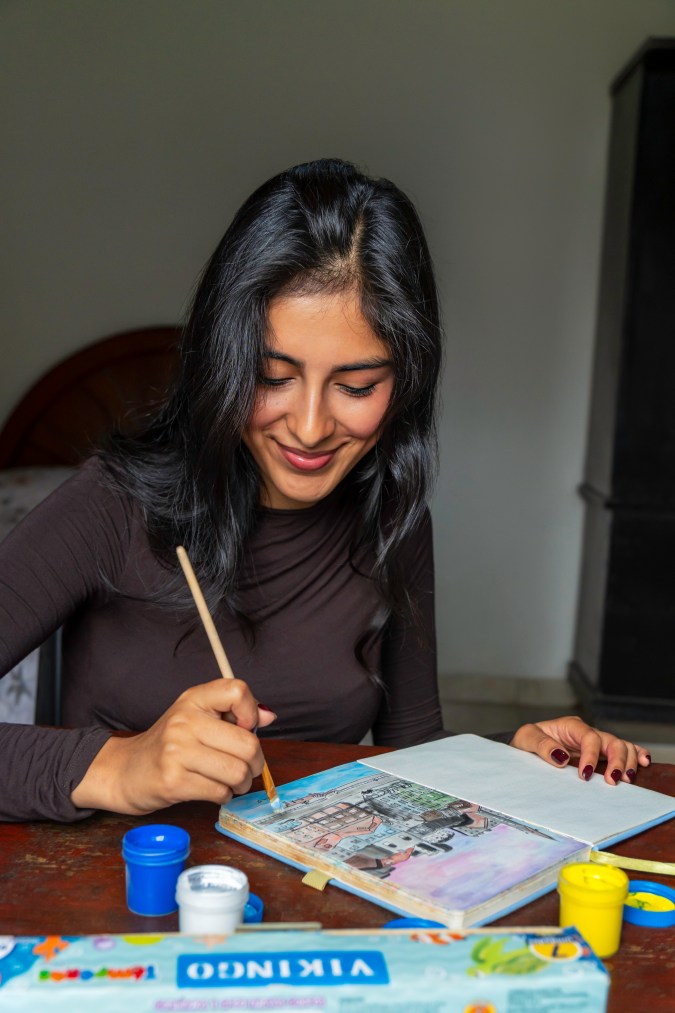
At 15, growing up in Trujillo, Peru, Salazar decided she wanted to study in the United States. Without a roadmap, she had the internet, back-to-back tabs open, and the determination to turn confusion into a checklist. “I was typing, ‘What is SAT?’ Because I didn’t even know,” Salazar said.
But yeses—especially big ones—still come with price tags. To cover study materials and application expenses, Salazar taught English to kids while continuing to research and save. Eventually, Salazar found Beca Cometa, a private Peruvian scholarship program for students aiming for top U.S. universities. Intimidated but determined, she applied.
When the acceptance came, it felt unreal. And when the funding came? Her world opened up. “It was so surreal,” she said. “But it was even better than I imagined because… this scholarship… covered absolutely everything.”
Then reality set in: she had to leave. If leaving Peru required courage, leaving family required something else entirely.

When Salazar thinks about her move to New York City, she comes back first to what she’d miss—especially time with her younger brother. She realized she would only see him a handful of times each year during some of his most formative years.
After she moved, she learned to keep family close in smaller, steadier ways. She talks to her mami every day. When she visits home during summer break and the holidays, she stays in her childhood bedroom. And after any TikTok video goes up, her parents remind one another to “hit the like button.”
Ask what home means, and Salazar won’t point to a map. “Home is the people that you have around,” she said. “Any place can be amazing if you have the right people around you.”
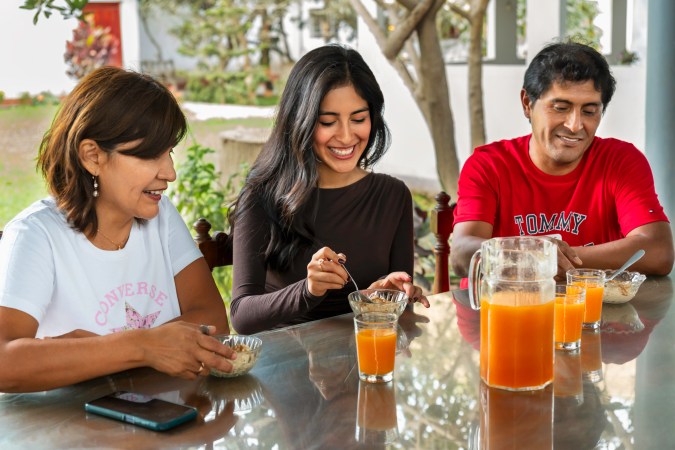
For her, that idea has taken shape over time: born in Barcelona to Peruvian parents, raised in Peru, and now building her life in New York City—with friends and extended family spread as far as Zurich.
Rather than belonging to one place, she’s learned to carry her sense of belonging with her. “I think it’s interesting how every time I’m away, I become more Peruvian,” she says through a smile.
That evolving definition of home is also how she’s approached college. For many students, college is about independence. For Salazar, it’s also been about connection; she’s not interested in experiencing life alone.
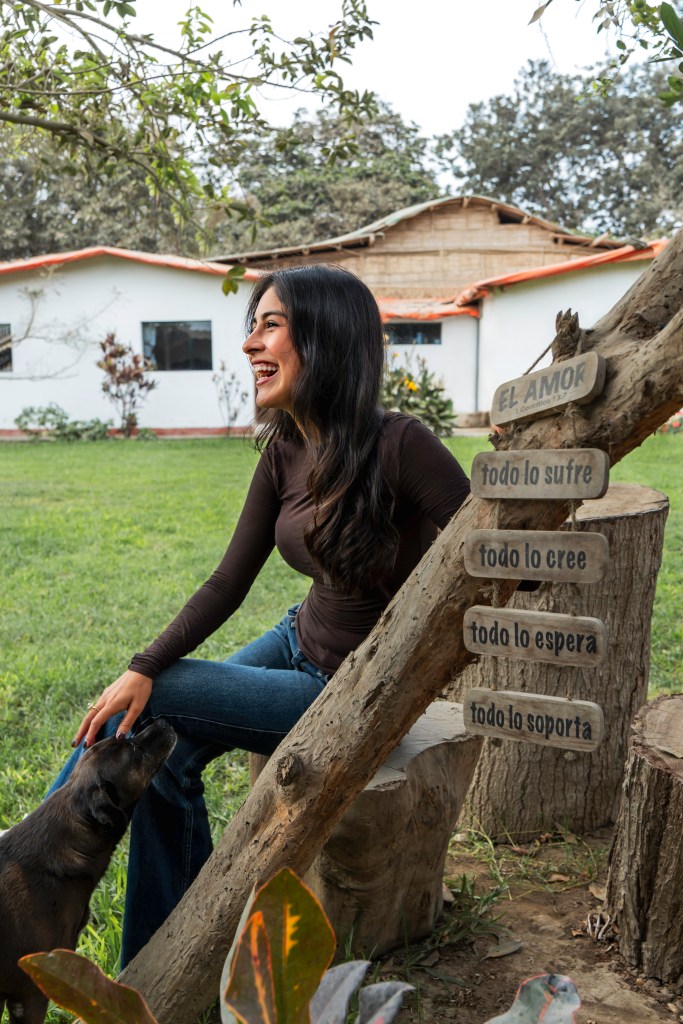

If home is people, Salazar organizes her life around staying close to hers. She laughs about having 30 friends’ locations saved on her phone. She schedules lunches. She checks in. She rarely eats alone. The people she met during her first weeks at NYU quickly became more than classmates; “they became family; that’s also home,” she says.
That intentionality shows up in the way Salazar pursues sports, too. “I played in school too with my friends every day… I always love to play. [Whether] it’s like 2:00 p.m. or 9:00 p.m., if they [text] ‘We’re going to play right now,’ I drop everything, and I’m in—especially for soccer.”
Her love of fútbol comes from her father, who played professionally in Peru and still plays for fun. Some of her earliest memories involve staying up late to watch FC Barcelona matches with him while living in Barcelona.
“I would try to stay up as [much] as I could so I could hear if they scored or didn’t,” she says.
For Salazar, sports are more than fandom—it’s a language she shares with her dad, and it “keeps me connected to Barcelona.” It’s also a natural extension of her interest in communications, whether that eventually leads to sports journalism, sports marketing, or somewhere in between.
“One of my dreams is to do sports marketing… or sports journalism. I used to dream of commenting on matches or interviewing players,” she shares with excitement.

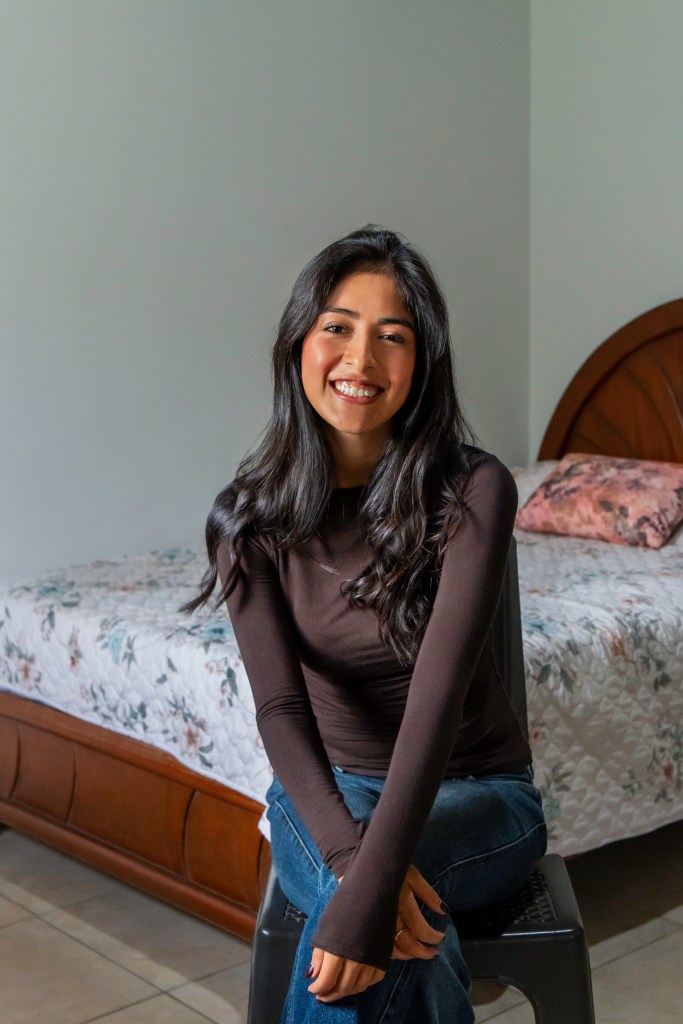
That openness carries into the way she approaches content creation. And it didn’t begin with a plan—it began with boredom in bed, curiosity about algorithms, and a desire to crack the code.
After a scroll session one day to see what stops people, Salazar filmed a heatless curls video—almost as an editing exercise. Then, unexpectedly, it hit. “It reached like one or two million,” she said. “People really want to know about this.”
What started as beauty content became something bigger. First-generation American and international students began reaching out with questions about college applications, scholarships, and studying in the U.S.—the very things Salazar once had to teach herself. “Now I get these thousands of messages every single day. I can’t even keep up,” she says.
And on campus, she’s been surrounded by peers doing the same—turning side interests into real work.
“You can really learn to do anything and be successful,” she said, talking about friends dropping albums, launching podcasts, booking interviews, and making movies.
When I asked what advice she would give her younger self, Salazar returned to an archived fear: the idea that you’re already behind before you’ve even begun. “I would tell her not to worry too much,” she said. “I remember thinking I was late in life, and I was only 16 or 17.”
Now the advice is steady, almost tender. “You’re never too old to do everything you dream of,” she said, “or to try over and over and over again.”