
You can usually tell when a project has Angel Manuel Soto behind it, not just stylistically, but in what it stands for. From superhero films like Blue Beetle to music-driven character stories and now his latest action-comedy The Wrecking Crew, the Puerto Rican director tends to build from the same place: identity, responsibility, and a clear sense of who the story is for.
In the new action-comedy, Soto stepped into a story set in Hawai‘i, a place with its own deep cultural, political, and colonial history, and approached it not as an outsider extracting a backdrop, but as a guest entering someone else’s home. For him, the responsibility wasn’t optional — it was foundational.
“When I’m going to tell a story that takes place in a community or culture that isn’t mine, I do my due diligence,” Soto explained. “First, embed myself in the community. Second, surround myself with people from that community so I can constantly check in: Are we representing you as you feel, not as others expect to see you?”
In practice, that meant hiring local crew, bringing in cultural practitioners, and making sure Hawaiians weren’t just on set, they had a real voice and agency in the process. Soto has done versions of this before, building what he calls a “local circle” around his productions. On past projects, which included cultural consultants, here, it meant Hawaiian collaborators throughout.
“I learned in documentary filmmaking that my role is not to speak over people — it’s to let them speak for themselves,” he said. “I’m not here to comment on their lives. Their story is theirs to tell.”
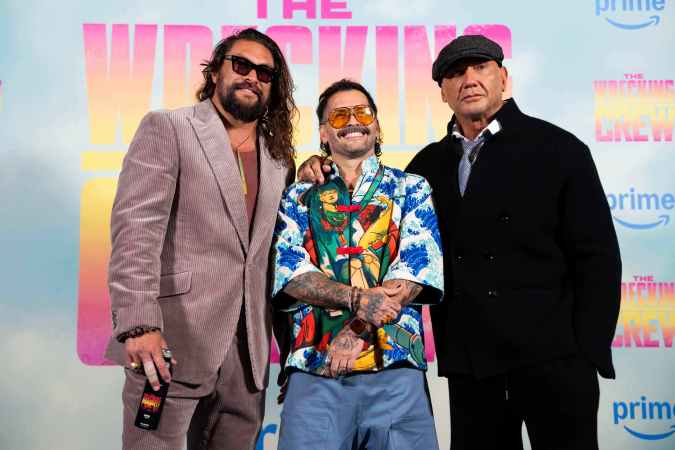
That philosophy extended to personal choices, too. Soto even underwent a Hawaiian ritual tattoo blessing from a local practitioner who determined whether the calling was appropriate. It’s a gesture he saw as necessary, not symbolic. Cultural specificity, he believes, should be guided by the people who live it.
At the same time, Soto pushes back against the idea that Latine directors should only be trusted with Latine stories. It’s a limitation he’s felt — and rejected — throughout his career.
His blunt version of the answer: if white directors are allowed to make films across all cultures and genres, Latine filmmakers should be afforded the same range. His more diplomatic version is about responsibility and rigor, not restriction.
He believes filmmakers of color often approach cross-cultural storytelling with a level of care that Hollywood has historically lacked, precisely because they understand what misrepresentation costs.
“As a director, I control tone and emotion,” Soto said. “But the cultural specificity of different communities, that’s not mine to control alone. That belongs to the people.”
That same care shows up in The Wrecking Crew, which plays as action-comedy on the surface, but it still makes room for questions about land, displacement, and who gets pushed out of their own communities, themes Soto kept coming back to in our conversation. He pointed to the parallels between Hawai‘i and Puerto Rico, both shaped by U.S. intervention, cultural pressure, and population displacement, and saw a chance to connect those realities through story.
“We’re living these realities now,” he noted, pointing to gentrification and forced migration. “More Hawaiians are living in the U.S. mainland than in Hawai‘i. There are more Puerto Ricans in the mainland than on the island. I saw an opportunity to reflect on something I live every day and find brotherhood between our communities.”
Soto doesn’t see genre as an excuse to keep things shallow. For him, action and comedy can still hold emotional and political weight if you let them. When he’s reading a script, Soto told us he looks for three things: Is it actually fun to explore? Does it go to an emotional place that the genre usually avoids? And just as important: Does the world feel real enough to hold all of that? In this case, that included exploring male vulnerability beneath macho archetypes, what he described as “two toxic men breaking down their barriers and embracing vulnerability to become better men.”
Even casting choices reflected his cultural lens. When questions arose about Brazilian representation and Latinidad, Soto pushed back against narrow definitions. The misconception that “Latine equals Spanish-speaking,” he argued, is rooted in ignorance, and he used character dynamics to play with that misunderstanding intentionally.
The result is a film that aims to be entertaining first, but not empty. Universal emotion, Soto argues, is what makes stories travel. Cultural authenticity is what makes them matter.
Hollywood still tends to try to keep Latine creatives in culture-only boxes. Soto’s body of work keeps proving that range isn’t the issue — access is. With movies like The Wrecking Crew, he makes the case that directors of color aren’t limited by genre and when they’re trusted with larger worlds, they often handle them more responsibly, not less.
Watch ‘The Wrecking Crew’ now on Prime Video.