
In the indie film world, it’s a harsh reality that getting any audience to watch your project is a daunting task that most fall short of. For Puerto Rican filmmaker Val Vega and her short Melao (“Molasses”), that’s how things seemed to be headed, until she took matters into her own hands.
Val, an actress-turned-director from Mayagüez who cut her teeth as a music video director for artists such as Young Miko, Joyce Santana, Rawayana, Feid, and more, wrote and directed Melao back in 2022. The short is a 24 minute drama following a sugarcane worker in 1950s Puerto Rico struggling to provide for his pregnant wife, and ends up making a horrifying sacrifice in the process. The film is alternately touching and brutal, commenting on the lengths people go to in order to survive under oppressive colonial conditions, and wears its message on its sleeve. It was inspired by a real story told to Val by her father, based on his own uncle’s account.
After an auspicious premiere at the HollyShorts Film Festival in 2024, the film found itself in a limbo many other projects end up in as well. That is, until March of this year when Val decided to upload it to her personal YouTube channel. What happened next was something she didn’t expect.
Within days, dozens of reaction videos began to appear on TikTok, Instagram, and other channels, and her social media began to be flooded with comments. Users reported emotional reactions to the short, both because of its subject matter and also because of the thrill of being able to see a legitimate Puerto Rican cinematic endeavor — which tend to not cross outside of the islands’ borders. In two months, Melao amassed nearly 200K views.

The overwhelming response took Val by surprise, but it also made her reflect on why it happened. “It made me realize that audiences today are not just connecting with the final product but also with the human behind it, and my unique perspective as a creator,” she says. “I think that we live in a society right now where we are so disconnected because of our phones and AI… People just want community. People want to feel like they can attach to something human and something real.”
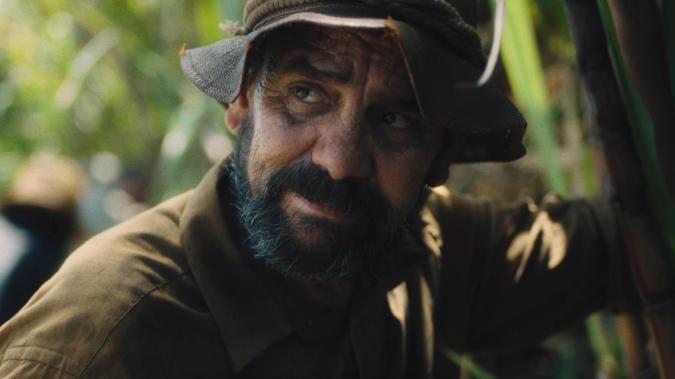
The overarching themes of Melao spring from a specific Puerto Rican place in history, but echo beyond because of how they mirror the experiences many others heard passed down by their own families. “I realized that — without even trying — I created a community of folks, not just in Puerto Rico but in the diaspora and even [with] Latinos in general who feel like ‘this is a person that understands what my family went through’ and she just so happens to be this woman in Puerto Rico,” she says.
Recently, more films emerging from Puerto Rico have seen recognition and accolades that previously seemed hard to reach.
In 2024, La pecera (“The Fishbowl”) by Glorimar Marrero Sánchez was a Goya Award nominee for Best Iberoamerican Film, and a contender for the Sundance Film Festival’s Grand Jury Prize in the World Dramatic Competition. This year, Esta isla (“This Island”) by Cristian Carretero and Lorraine Jones was awarded the coveted John Cassavetes Award at the Independent Spirit Awards, and Carlitos Ruiz-Ruiz’s Summer of Three won Best Performance and Best Screenplay at the Tribeca Festival.
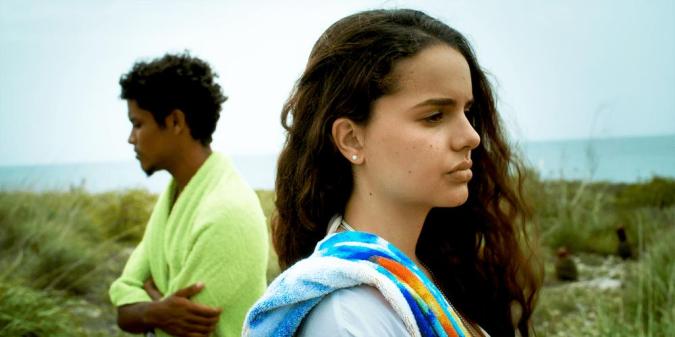
The breadth of the offerings has also begun to widen, with genre fare finally coming into its own. High-concept comedies like Picando alante, Yerba buena, and Hasta que la celda nos separe were local hits, and ambitious films like Ray Figueroa’s samurai jibaro epic Érase una vez en el Caribe (“Once Upon a Time in the Caribbean”) and Heixan Robles’ sci-fi thriller Borealis have given audiences more variety when they pull up to theaters.
In the near future, screenwriter/actress Marietere Vélez — whose drama Receta no incluida (“Without Prescription”) won a SXSW Audience Award in 2022 — will vie to become the islands’ first bonafide scream queen with her slasher No estás sola (“You Are Not Alone”). Others, including upcoming dramas like Raisa Bonnet’s Trenzadas (“Braided”), Michelle Malley Campos’ Extranjera (“Foreigner”), and Kisha Tikina Burgos’ La gran desilusión (“The Great Disillusionment”) are serious contenders for awards consideration.
Val sees all of this as reasons to be optimistic about what is to come.
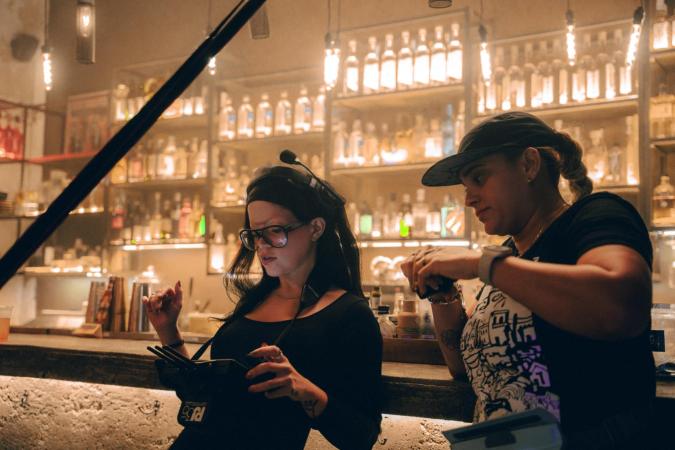
For her and other local filmmakers the push to make cinema is a calling, but one that needs all the support it can get. “Film is the cultural representation of a space, audiovisually. Right now, Puerto Rico is at the centerstage of pop culture. If we don’t have the resources for the younger community that has new ideas our stories are going to be told — we’re in the center of pop culture, it’s financially enticing for our stories to be told — [but] they’re not going to be told by us,” she warns. “So what’s going to happen is a diluted representation of the Puerto Rican that is palatable for the general consumer, and that would be a disservice to our culture.”
Non-Hollywood projects in Puerto Rico face many roadblocks during development, most strikingly the reputed lack of support from both the Puerto Rico Film Commission and DDEC (Department of Economic Development and Commerce) in awarding funds and incentives. Even megastars like Residente and Bad Bunny opted to shoot their star-studded feature Porto Rico, about Boricua revolutionary Águila Blanca, in the Dominican Republic because of the same complaints (politics, you might not be surprised to learn, allegedly also play a part in who gets favored.)
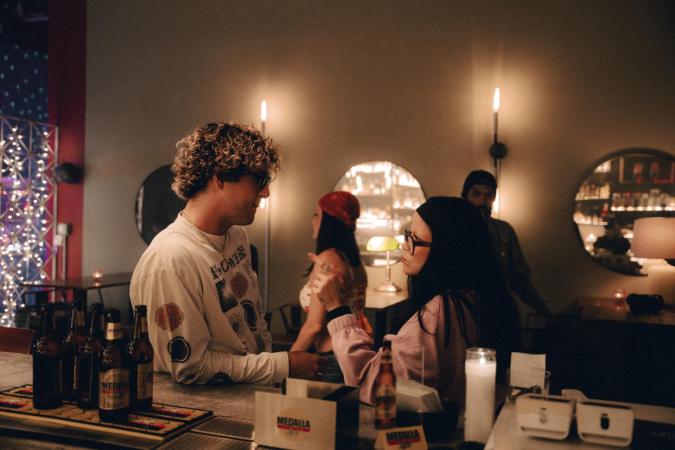
Val hopes that the viral success of Melao demonstrates a new avenue for filmmakers, and also gives people a modern sense of who can be one as well.
“When I was younger, there was no Puerto Rican director that was a woman and that’s why I threw myself into acting. There was no person that I could attach to when I was 17,” she says. “Today, I would love to inspire a younger generation to do whatever it is that they want to do if they’re after this career, y’know? Especially since I know that I don’t necessarily look like [a director.] We imagine someone that looks like Steven Spielberg. I’m not that person, and I never want to feel in life like I have to edit myself to be able to achieve my goals as a director or as a creative. I think we’re entering into a world where our unique perspective in life is gold, is key.”
With the YouTube-to-cinema pipeline getting more attention than ever with the recent success of films like Iron Lung, Obsession and Backrooms, it might be time for a Latine story to make the leap from web browser to the big screen too.