
With a fresh approach to flavor profiles and a fiercely focused branding ethos, Cookies co-founder Berner (real name Gilbert Anthony Milam, Jr.) has been an entrepreneurial force in the cannabis industry since the medical marijuna era in the early 2000s.
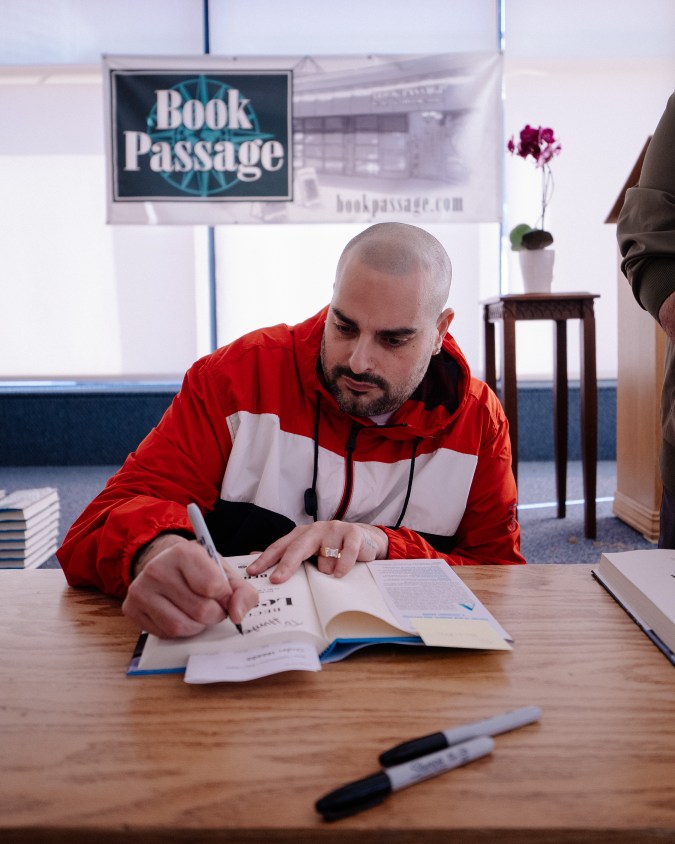
His business empire, named after a popular strain known for pungent sweetness referencing girl scout cookies, has become a source of inspiration for others in the cannabis space and beyond. He even wrote a book about his journey to guide folks called Becoming Legend— The Billion Dollar Blueprint to be a Whale in a Sea of Sharks.
Born and raised in San Francisco, smoking bud beguiled Berner at a young age, but he also had a strong work ethic being raised by hard working parents (his Mexican-immigrant father owned a taco joint when he was a kid). So he got a job at a dispensary as soon as he turned 18.
“I fell in love with it even more,” he tells Remezcla. “I realized that it was not only people like me who smoke weed, it was off-duty police officers, ex-military, teachers and people from all different walks of life.”
Back then, pending legalization promised a huge potential for growth. And his professional approach with Cookies when it launched in 2018 was driven by atmospheric retail environments alongside quality products and a strong brand name. There were challenges along the way, and he says there still are, such as the “tax situation, which is all fucked up.”
Due to state legalization and federal prohibition disconnect, cannabis taxes are indeed difficult for those in the business to navigate. State-legal cannabis purveyors endure major federal limits. Since marijuana is still a Schedule I controlled substance under the law federally, Internal Revenue Service code prevents cannabis companies from deducting many expenses that are standard for others like rent, employee pay, and advertising.
Still, Cookies was profitable from the get go. “Once we opened up our first store, people were super excited to be able to get their hands on the real Cookies,” he explains. “There was a lot of fake stuff going around and there was a little mystery around the brand, [people wanted to know] what’s real and what’s not, how can I get it, how can I get the new stuff he’s rolling out? So when we opened the stores, it was game.”
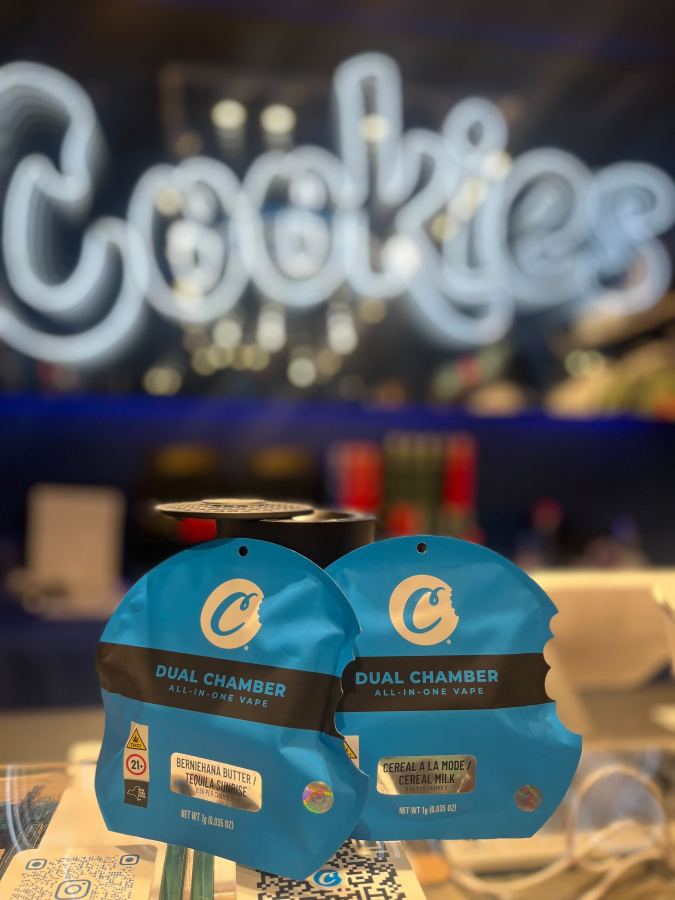
Of course legalization in California opened the floodgates for cannabis brands and it seemed everyone wanted some of the pot. The years that’ve followed have seen a bounty of brands come and go.
“People were scared in the medical days but there’s been a super oversaturation in cannabis since legalization…. it was kind of like the green rush,” Berner says. “But the best way to overcome that and stand out is just be great at what you do… and have purpose in what you do. A lot of people are coming in for money. I’m not really focused on money. I’m focused on getting good weed to people and that’s what kind of separates us.”
Berner is also proud of Cookies’ ever-evolving new flavors and highs. “I like to introduce new things to people and I feel like we keep coming with great menus,” he touts. “So, it’s like if you’re a restaurant, you have great menus and there’s a good chef and there’s always a good menu there. The quality of the menu is really, really good at Cookies. So, that’s what made us stand out. Other players are coming in, but they don’t even understand how important genetics are.”

At Cookies research and development facility in Humboldt, CA., Berner says they are breeding new genetics around the clock. “We’re always making new menus and we have a bunch of new things we constantly and continue to roll out,” he shares. “Like most people will just hire a tomato farmer and get what they can get and grow it and sell it in mass and in bulk and it just sucks. But we like to get the best, most interesting flavors. When you’re a connoisseur of the plant then you’re going to come with some heat, you know? I smoke weed, so I want to make sure I smoke the best.”
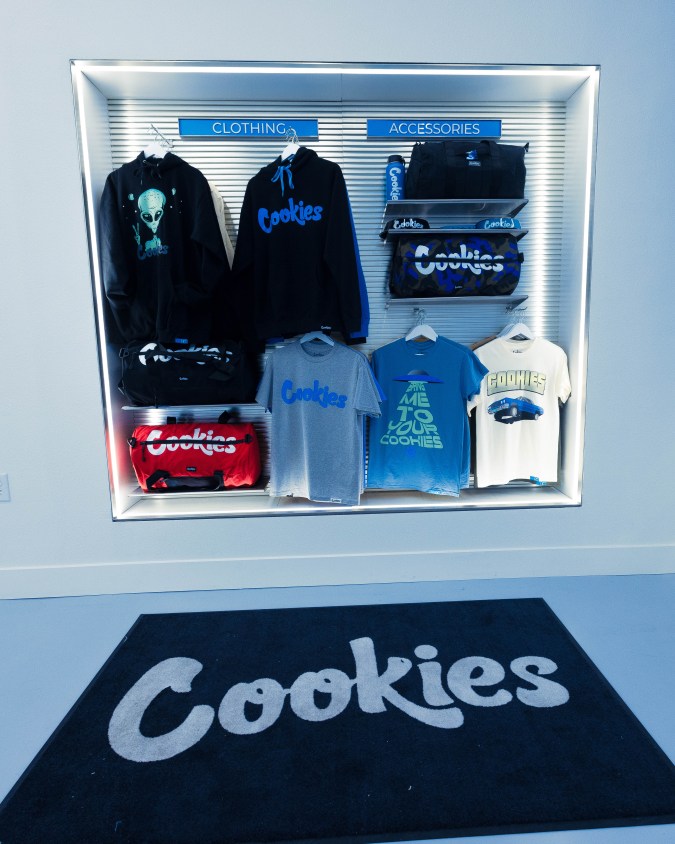
Cookies currently boasts 70 retail locations across six countries and his relentless drive to be the best has led to other creative endeavors, including the Cookies global streetwear and accessories brand, which has four standalone retail locations across the U.S. and Europe (SF, LA, NYC and Vienna, Austria).
And though the stigma around cannabis is fading, it’s not entirely gone.
Berner says he’s been “kicked out of every single bank you can imagine because I’m attached to cannabis and I’ve been put in a box,” but his success is proving a major force in changing things. “It is a lot less of a big deal than it used to be. If you look at the world today, more people enjoy cannabis than they do alcohol. People don’t feel sick the next day and they don’t want the hangover so it’s making its way into the mainstream,” he adds.
“When you’d watch movies back in the day, people would pour a glass of whiskey and smoke a cigarette, but I’m seeing more people smoking weed in movies now which is really cool,” he says. “This is becoming normalized. It’s something that people do.”