
When Rauw Alejandro steps into a new era, he does more than release music; he builds worlds — from the neon-soaked future of Saturno to the cinematic nostalgia of Cosa Nuestra. His latest visual, “Besito en la Frente,” captures that same creative evolution, this time through a lens both literal and symbolic. Shot entirely on the iPhone 17 Pro, the music video and companion docu-film blend technology, tradition, and the rhythm of Puerto Rico in a way that feels both modern and ancestral. Through sweeping shots of the island’s landscapes and folkloric characters, Rauw transforms movement into memory, creating a cinematic bridge between innovation and heritage.
At the heart of this new work lies bomba, a centuries-old dialogue between the drum and the dancer. Born from the enslaved Africans who shaped Puerto Rico’s earliest expressions of freedom, bomba originated in the sugarcane fields as both a celebration and a form of resistance. It endures today as a living expression of Afro-Puerto Rican identity, carried forward by a new generation of artists who are reclaiming it as a tool of cultural memory and creative power.
With “Besito en la Frente” and the broader project Cosa Nuestra: Capítulo Cero, Rauw revisits those roots while looking ahead. The result is a visual statement about identity and artistry, where past and present move to the same rhythm. At the center of that vision is Martín Seipel, Rauw’s longtime creative collaborator, who helped shape the look and feel of this new era. In this exclusive interview, Seipel reflects on the making of Cosa Nuestra, what he learned from the masters of bomba, and how the island itself became the soul of Rauw’s story.
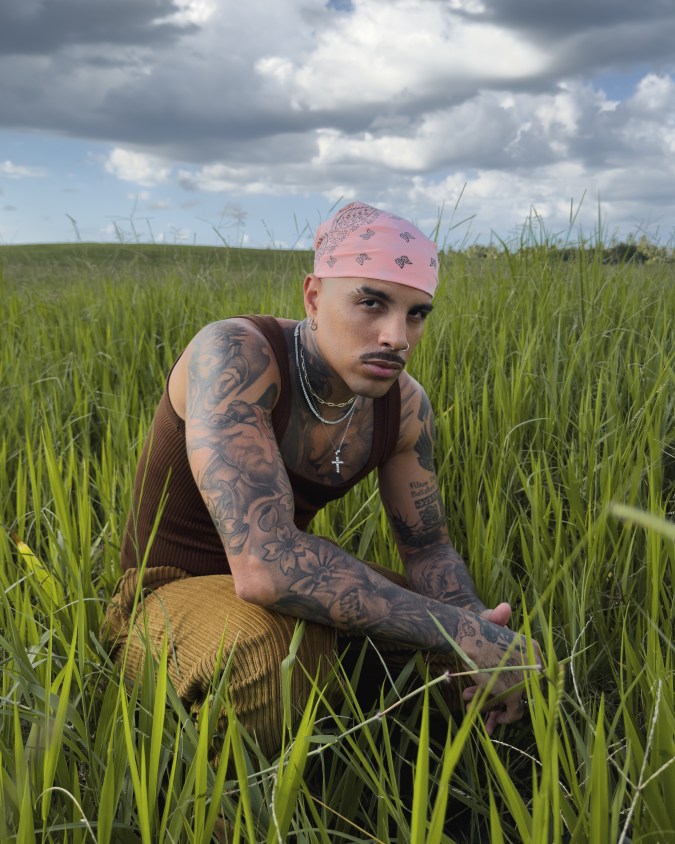
How did you and Rauw first meet, and how did that relationship evolve into such a close creative partnership?
We met through a mutual friend, Matías Solari, who is also from Argentina and now Rauw’s manager. In 2020, we shot a video together in Miami, and from there, the chemistry was instant. We are both people who never stop imagining concepts, and that connection turned into a collaboration that is now six years strong. We complement each other really well.
What inspired you to help launch this Bomba project, and how did that shape your creative direction during filming?
The first time I met Rauw, what struck me most was that he danced. I used to dance too, so he was doing everything I once wanted to do. Since I have always been passionate about filming both music and dance, working with him felt like the perfect combination of all my favorite things. Most of our videos involve movement and rhythm, usually in a more urban or reggaetón style, but Cosa Nuestra is about returning to roots.
It’s a project that explores Rauw’s origins, specifically his Puerto Rican roots and his love for Bomba. For me, that meant learning deeply about Bomba and understanding that it is more than just dance. It is a dialogue between the drummer and the dancer. That exchange was fascinating to me and influenced how I built the rhythm of the final film.
How would you describe Bomba to someone who has never experienced it, especially from your production perspective as a non-Puerto Rican artist?
If I had to describe it in one word: dynamic. Each dancer interprets it differently, but what unites them is the internal communication: the constant exchange between the drum, the dancer, the maracas, and the voice leading the song.
The percussion really amazed me, the endurance it takes to keep that rhythm alive. But the most powerful part is that there is never absolute silence. Both the drummer and dancer know what comes next through their connection. It’s mostly improvised yet perfectly synchronized. We tried to capture that same energy on set, especially in one scene with two dancers dueling with a handkerchief, the only choreographed moment. Everything else was pure freestyle, and it never stopped.
Bomba has deep roots in resistance and identity. How did you reflect that visually or sonically in your production choices?
Rauw led the creative direction of the story, but we worked with incredible collaborators like Rafael and Aixa Cepeda, who helped select and prepare the dancers. The traditional masks were designed by Juan Luis Sanabria, and stylist Patricia Rosado brought in looks inspired by Afro-Caribbean heritage.
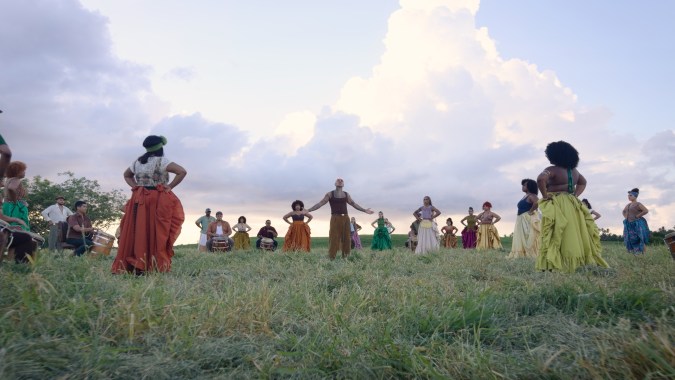
Beyond the creative direction, it was important that the people representing the tradition were part of it on set. Many of the drummers and dancers in the video are the same people we saw performing Bomba at local bars and gatherings around the island months before. To be able to film with them later was an honor. It made the project feel authentic and full circle.
Rauw’s visual world often merges futurism and tradition. How did you approach that balance in this project?
When we began developing Cosa Nuestra, we identified the places where Afro-Caribbean culture and Bomba were born. That guided our filming, when, where, and how. The landscapes became central to the story.
Rauw calls this “neo-Bomba,” blending his futuristic style with Puerto Rico’s traditional rhythms. From a cinematographic point of view, filming outdoors was the biggest challenge, with shooting in waterfalls, beaches, and mountains under unpredictable weather. But it also allowed us to show the beauty of Puerto Rico. Every location in the video is a real place people can visit. It is a love letter to the island’s landscapes as much as to its music.
Was there any creative or technical decision that audiences might not notice but was intentional?
Everything was filmed entirely on an iPhone 17 Pro. That decision changed everything. It gave us the flexibility to shoot in every condition, day or night, underwater, in the rain, or under full sun.
We used the phone in innovative ways, creating 360-degree perspectives, underwater shots, and panoramic landscapes. The practicality of the device let us move fast and shoot more without losing quality. Honestly, I think the results rival any professional cinema camera. The accessibility of that technology made the project possible and helped us capture Puerto Rico’s beauty in a way that feels intimate and raw.
Any last thoughts you would like to share about the creative vision behind this new era?
This project represents the fusion of many worlds, Rauw’s artistic evolution, Puerto Rican tradition, and the magic that happens when you approach culture with respect and curiosity. For me, Cosa Nuestra is not just about documenting Bomba. It is about listening to it, learning from it, and letting it guide the story.
Credits
Direction and Creative Concept – Rauw Alejandro and Martín Seipel
Dance Direction – Rafael and Aixa Cepeda
Costume and Styling – Patricia Rosado
Mask Design – Juan Luis Sanabria
Filmed on Apple iPhone 17 Pro
Apple PR Contact – Vanessa Tartak Del Valle
Production – Cosa Nuestra: Capítulo Cero