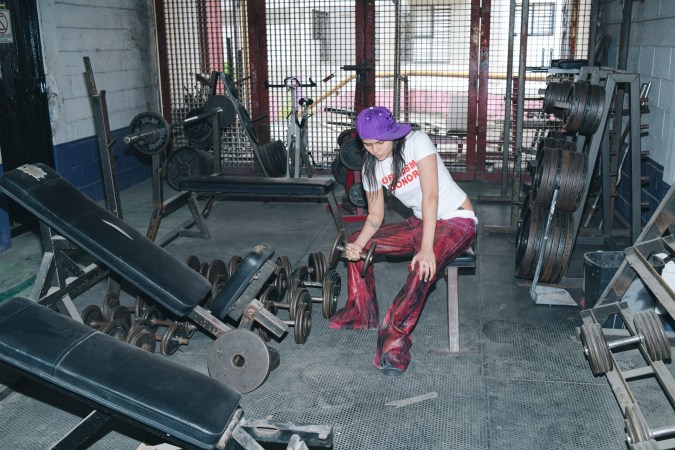
Chzter’s world looks like a half-corrupted internet memory. Low-res selfies, heavy bangs, oversized streetwear, emo-era filters, reggaeton swagger, lesbian shitposting, and the kind of visual chaos that only makes sense if you grew up watching online subcultures form in real time. It’s funny, horny, and deeply intentional, even when it feels like a 3 a.m. camera roll curation. But beneath the playful distortion is an artist carving out something still too rare in música mexicana: reggaeton made by a lesbian for women, with no need to soften desire or translate the feeling for anyone else.
Born in Iguala, Guerrero, the 24-year-old artist grew up surrounded by banda, corridos progresivos, música norteña, and the romantic ballads her family often played. “I grew up with my grandmother, and she’d clean the house listening to Joan Sebastian every day,” she shares. Later came Daddy Yankee and the first waves of reggaeton she heard as a kid, followed by English-language electro-pop and electronic music in adolescence. Like much of her generation, Chzter’s musical identity was formed in fragments.
Music became serious during the pandemic, after she moved to Guadalajara and found herself surrounded by hip-hop. Boom bap became a bridge between writing and making music. “It felt super easy to make,” she says. “I didn’t have to sing. I’ve always liked writing, so poetry and rap felt very connected to me.” After recording her first track with a friend, she went home, searched for YouTube beats, and became obsessed with writing every day. The boom bap era didn’t last long, though. By her third song, she had shifted into reggaeton.
That quick pivot says a lot about Chzter’s artistic instinct. She wasn’t chasing reggaeton in its most obvious form, but intrigued by something darker and weirder. Around that time, she started discovering neoperreo and underground artists like Ms Nina, Tomasa del Real, and Mexican Jihad, drawn to a version of reggaeton that felt more experimental and emotionally open. Since then, her catalog has refused to sit still, moving between reggaeton, trap mexicano, electronic textures, punk flashes, funk touches, and melancholic left turns.

Four years into making music, Chzter still sees herself in a state of experimentation. “I feel like I’m still finding my sound, but at the same time, I think my style is doing many things too,” she says. Her influences stretch across neo-perreo, hip-hop, corridos, and even indie rock. On “Destino o Karma,” she directly nods to “Call It Fate, Call It Karma” by The Strokes, reworking the song’s hazy melancholy into her own Spanish-language world. “I wanted to make something nostalgic,” she says. “The lyrics, the way the voice sounds like it’s coming through a radio.” She even admits the reference comes off as unexpected. “I never really talk about being a rockera or liking The Strokes,” she laughs. The reference feels unconventional inside reggaeton mexa, but that collision is exactly what makes Chzter compelling. Her music lets internet humor, sexuality, club music, Regional Mexican sounds, and alternative sensibilities collide in the same space.

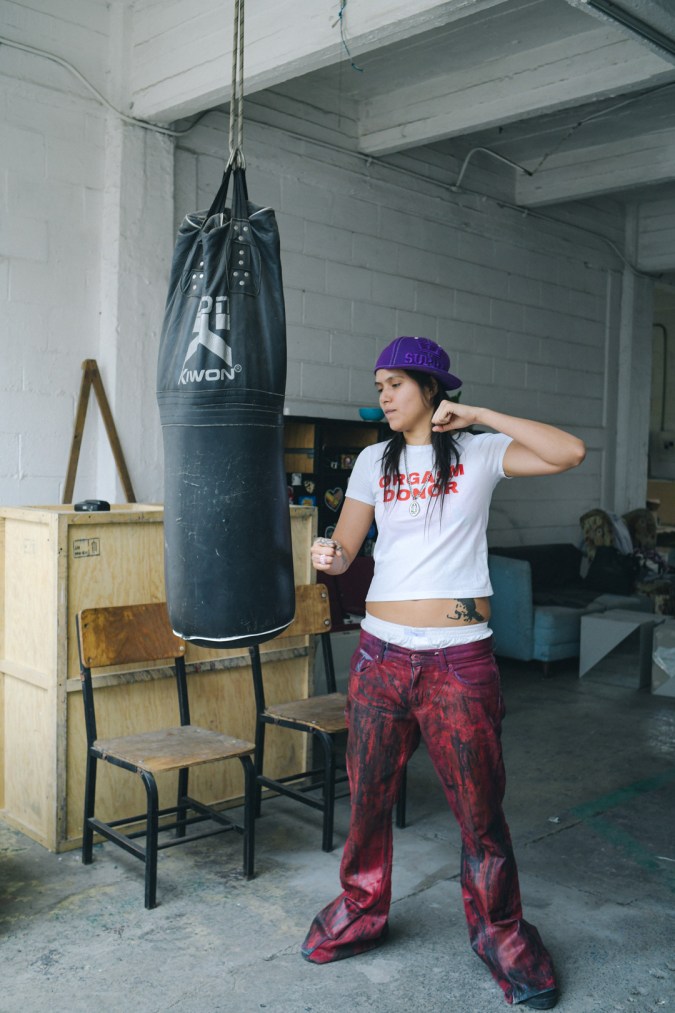
That same instinct carries into her visual world. Chzter’s aesthetic pulls heavily from early internet subcultures and the online chaos that shaped her generation. “I see it as a symptom of our generation’s nostalgia,” she says. “We grew up when social media and the internet were really starting, and so many subcultures came out of that.” She points to emos, reggaetoneros, old filters, exaggerated typing styles, and chaotic online humor as key influences on the identity she has built around her music. “I think I took a lot from that era and that identity, which also feels very Mexican to me.”
Still, she moves through the current reggaeton mexa wave on her own axis. As artists like El Malilla, Yeri Mua, and Cachirula and Loojan push the genre onto bigger stages, Chzter sees the wave as a turning point for a country that spent years consuming imported reggaeton before building a distinct sound of its own. “It feels really good to finally have Mexican artists making reggaeton with a sound that feels unique to us,” she says. Her collaborations with artists like EMJAY, RAYBEN, RIXXIA, and others have become opportunities to explore different creative sides of herself. “Sometimes I adapt to them, sometimes they adapt to me,” she says. “But I like working with people who do something different from what I do because it brings out parts of myself I maybe hadn’t explored yet.”
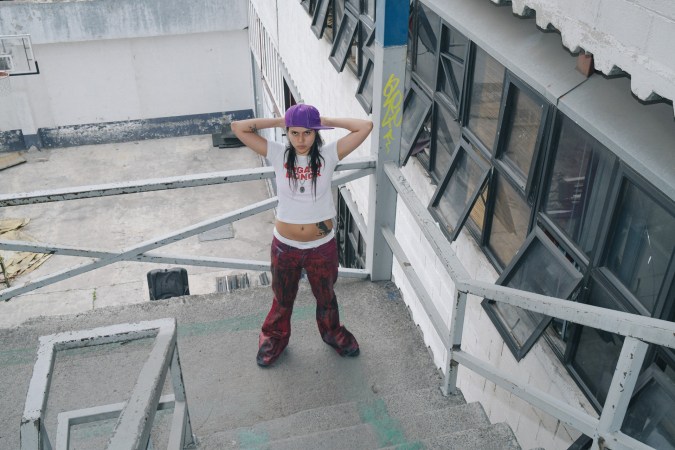
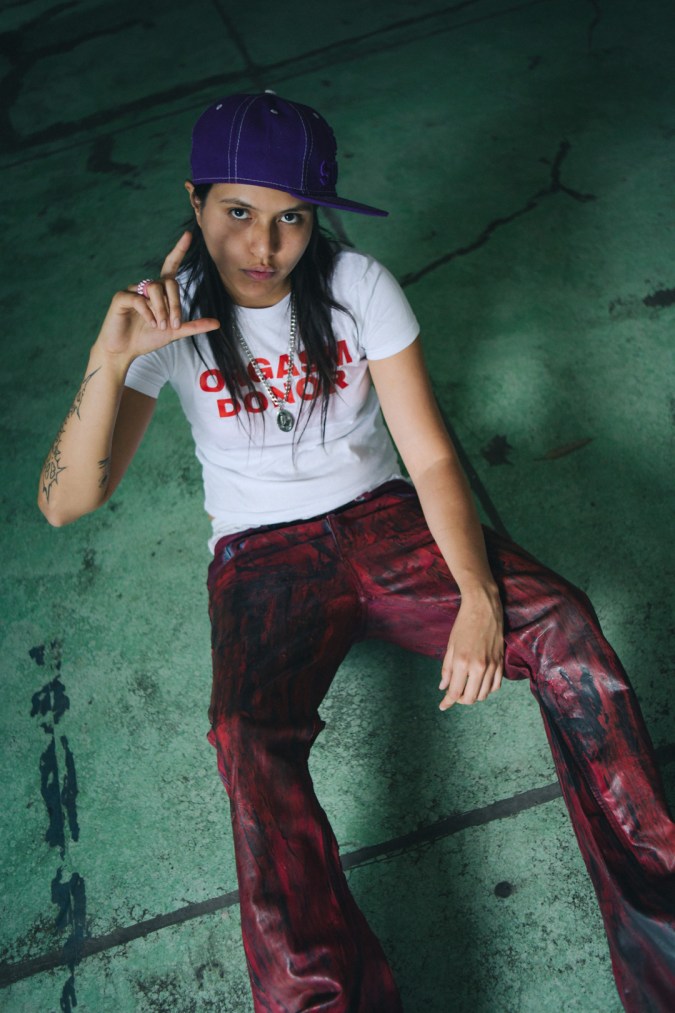
Still, the center of Chzter’s universe is unmistakably lesbian. In a Mexican music landscape she describes as machista, she felt the absence early. Even as more women entered reggaeton, she still rarely heard women singing directly to other women in Spanish-language music. “The few women that were there were still singing to men,” she says. “Where was the music for lesbians?”
So she made it herself.
In Chzter’s world, queerness is not separate from the music. It sits at the center of the lyrics, visuals, jokes, and internet language that shape her identity as an artist. Her live shows are energetic, sexual, and explicitly for the lesbians in the room. She talks to crowds like they are part of the same inside joke, shouting “gracias lesbianas” and “hagan ruido para las lesbianas” until the niche becomes the point. “Everything becomes really clear for my fans,” she says. “We’re part of something. We’re a community.”
Now, Chzter can feel the shift happening in real time. Music is no longer one priority among many, but the center of everything. She is signed to a label, building a team, and preparing her most serious project yet: a new album she still wants to feel fun. More than anything, she wants listeners to dance, flirt, and feel represented inside it. “I want it to be an album people can really enjoy,” she says. “Like, ‘I’m going out tonight, I’m going to dance to songs about women, and I’m going to go flirt with a girl.’”
In other words: long live lesbian perreo.