
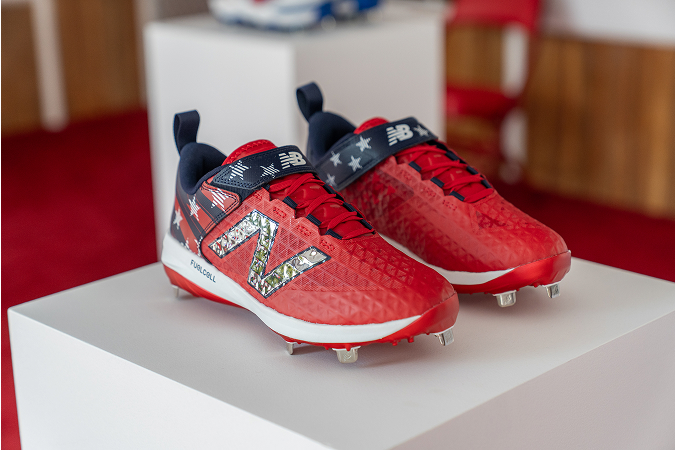
In the middle of Miami’s Design District, Jungle Plaza’s energy felt different. You could hear bats cracking before you even got close. New Balance took over the space for the weekend of March 14 and 15, setting up batting cages, a small field, and a clubhouse area with its latest World Baseball Classic-themed cleats laid out.
All fitting for Miami, since it’s one of the host cities for the tournament and is significant to the culture. In a city shaped by Caribbean and Latin American communities—and long tied to the sport through everything from sandlot games to spring training—baseball is part of the fabric in Miami.
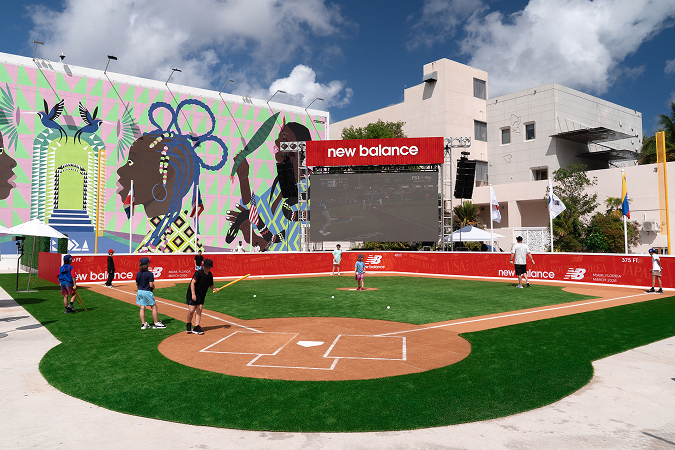
As soon as you walked in, you felt a shared energy among a mix of cultures. It was the kind of moment that shows up during the World Baseball Classic, when baseball takes on a deeper meaning, uniting diverse cultural identities through shared pride and tradition.
Around this time, especially in Miami, the game becomes a symbol of cultural pride. Flags on jerseys and hats, and people switching between Spanish and English, all point to a collective identity that fans cherish deeply.
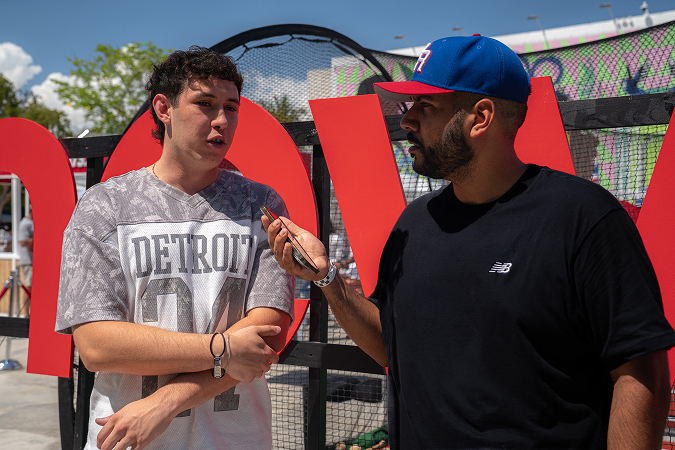
“Puerto Rico, Venezuela,” one attendee, Alex Ginestra, says when asked who he’s representing. “I feel like the people on the field are doing an incredible job representing not just with the sport, but with values, with discipline. I feel like it’s more than a game, everything they’re showing, especially right now.”
Sisters Cindy Ramos and Pamela attended together, both representing the Dominican Republic. After attending the WBC in 2023, they felt a deep, personal connection, tied to family, memory, and their late dad, who introduced them to the game.
“It’s a country thing. It’s us,” Cindy Ramos says. “We don’t care who you play for [in the regular season], it’s just about supporting where we are from and supporting our country.”
“It didn’t matter what teams they were playing on,” Cindy adds, thinking back to watching with her dad. “It was about supporting our people… supporting where we are from.”
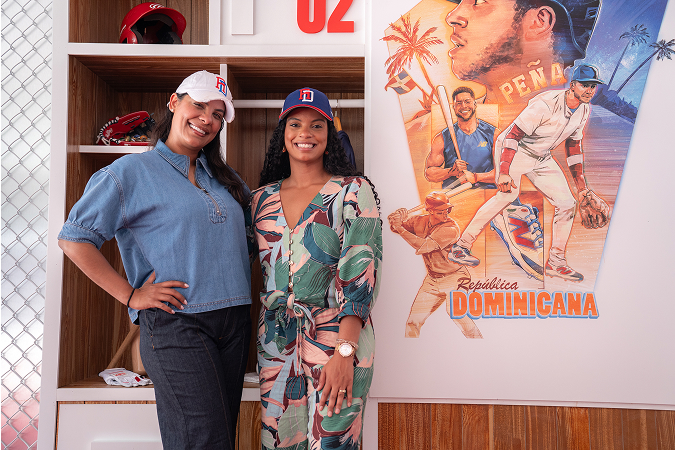
“I love it. I love my culture,” Pamela says. “I love how we just come together. I love representing it, like, to my chest.”
If you ask people why the World Baseball Classic feels different from regular-season baseball, most of them pause for a second because it’s not something they usually explain out loud. It’s feeling than anything else. For a lot of Latine fans, baseball didn’t start in a stadium. It started outside. In the street. In whatever space was open. This global event amplifies those roots, connecting fans worldwide through shared cultural expressions and collective pride.
“I feel like most of us grew up playing in the street, sometimes even with just a rubber ball and a stick,” Ginestra says. “That says a lot about who we are, where we come from, that we figure it out with whatever we have to play.”
That background shows up in how people experience the tournament now. Not just watching it, but feeling it.
“I think it’s like something in our blood, the baseball,” Ginestra says. “It’s something amazing.”
For others, it’s something they’re still discovering. One attendee visiting from the Netherlands, whose wife is Italian, said he hadn’t always been a baseball fan. But after attending a Dominican Republic vs. Venezuela game, that changed. What stood out to him wasn’t just the game itself, but the energy around it. The way fans moved, the way they reacted, the way culture showed up in the stadium, just as much as the sport did.
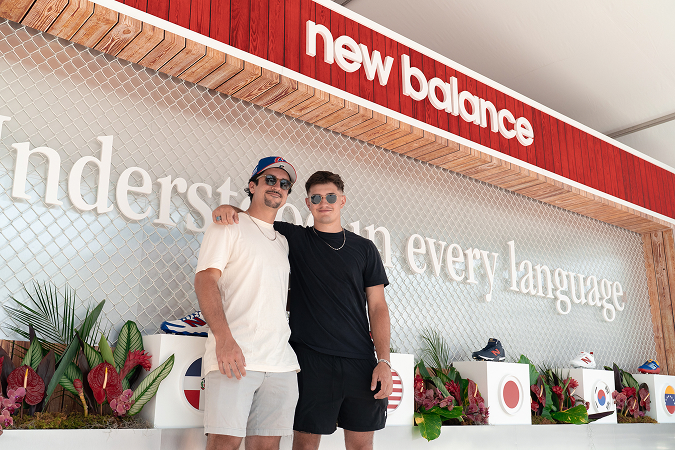
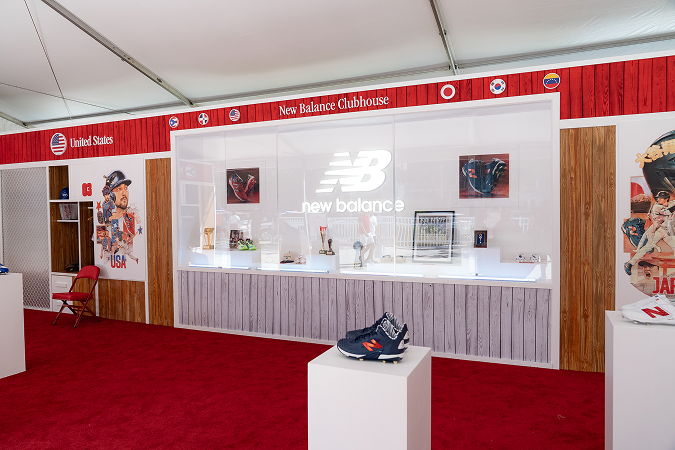
With the World Baseball Classic, you can see that pride in how people react and how loud it gets. The players carry it too. Inside New Balance’s space, that energy felt like an extension of the game. The brand built a clubhouse-style setup with each country having its own locker and cleat display: Puerto Rico, the Dominican Republic, Venezuela, the United States, and Japan. From a cowbell with a Puerto Rican flag to a güira, each activation was crafted intentionally, drawing inspiration from players’ identities and the cultures they represent.
Fans from Japan stopped to take photos with Shohei Ohtani’s setup, while others gravitated toward the pieces that felt closest to them. All around the event, there’s a sense of cultural identity and collective pride, deepening emotional engagement with the tournament.
Along one wall, New Balance displayed its newly designed cleats in front of various country flags. Above hung a simple, yet powerful phrase: “Understood in every language.” The colors, flags, and player associations behind the cleats told a story: Baseball and culture are inseparable, almost synonymous.
Another creative activation was an ice cream bar featuring custom flavors, such as Cal Raleigh’s custom Biscoff cookie flavor. Attendees would walk from one activation to another, taking in even the smallest details, even if they didn’t necessarily connect to their own country.
That’s what the World Baseball Classic does. It opens everyone and everything up a bit. It encourages us, fans, to appreciate how other countries play, celebrate, and how fans show up for their teams long after the tournament ends.
For Wayne Wasserberg, who attended with his son Andrew, that difference stands out. “When Venezuela, Puerto Rico, Dominican [Republic]… see their country, there’s more national pride,” he says, pointing to how the tournament brings something different out of international teams. Being there with his son adds another layer to it, too. “Coaching my son, watching him grow… made me a fan again.”

Throughout the space, people from diverse backgrounds shared a sense of unity.
Back at the batting cages, people kept rotating in and out. From kids to adults, they stepped in, took swings, laughed, missed, and tried again.
It wasn’t about whether you were bad or good. It was about being there, together.

Because that’s what the World Baseball Classic brings out: people. People show up for it in a different way. In a place like Miami, it doesn’t just stay in the stadium or around the games. You hear it in conversations, you see it in how people move through spaces like this. It’s everywhere for a few days. And it makes it pretty clear this isn’t just about baseball.