Bad Bunny 101: Hit Songs & Facts You Need to Know
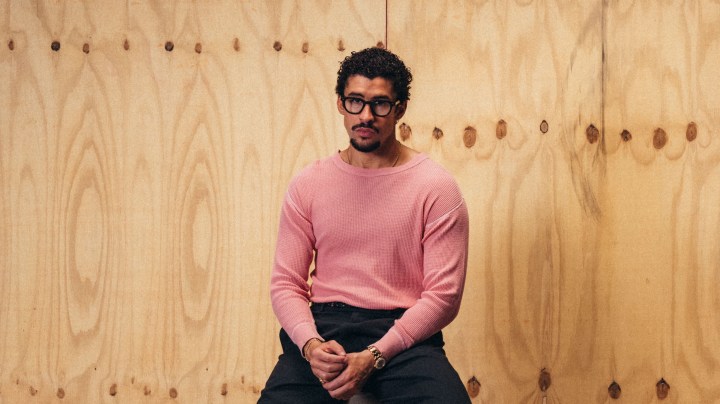
Photo by Eric Rojas
Bad Bunny’s history-making 2026 Grammy win is more than a decade in the making. On Feb. 1, the Puerto Rican icon was the first artist to win in the Album of the Year category with a Spanish-language project. And in less than a week, he’s going to headline the 2026 Super Bowl LX Halftime Show. But how’d he get here? Here’s the crash course you need.
In a nutshell, Benito Antonio Martínez Ocasio began releasing trap music on Soundcloud in 2016, turning heads with tracks like “Diles,” which would change his life’s trajectory thanks to the record label Hear This Music. After dominating the local trap scene with songs like “Soy Peor” and collaborating with Latine artists like Arcángel, Ozuna, and Bryant Meyers in the same circle, he eventually branched out to join other massive forces in the U.S. mainstream. His standout international collaborations include “Krippy Kush” with Nicki Minaj and Travis Scott, “I Like It” with Cardi B and J Balvin, and “MIA” with Drake, giving him an expansive reach at a time when the radio craved our communities’ music post-Luis Fonsi’s “Despacito” boom.
However, what set Bad Bunny apart from his peers was his focus on collaborations and his commitment to singing in Spanish. Sure, he worked with English-language artists, but he continued to center the Latine communities at the forefront as he rose to the top. He rejected conforming to U.S. music standards, instead carving out his own patch and championing our cultures—en español. He’s unique because he navigates his career however he wants—take his WWE trek, and Adam Sandler movie side quests as examples. But perhaps the biggest indicator of him being a generational artist was when he invited the world to his homeland for his history-making “NO ME QUIERO IR DE AQUÍ” residency, which was nothing less than successful. And by sticking to his roots, he’s now continuing to reap the fruits of his labor, most recently earning the Grammy for Album of the Year.
But how’d he get this far? From the career-making Arcángel co-sign “Tu No Vive Asi” to his now iconic “BAILE INoLVIDABLE,” here are 11 standout tracks to get to know the generational artist and why they are significant to his career’s trajectory.
“Tu No Vive Asi” (2016)
There’s a reason the influential reggaeton hitmaker Arcángel is always supporting Bad Bunny in his concerts, and why Benito also shows up when he needs him. The duo has supported each other’s careers and helped amplify their audiences with hits like “Tu No Vive Asi,” “Me Acostumbre,” and “La Jumpa.” Also featuring Mambo Kingz & DJ Luian, who helped Bad Bunny in his beginnings, this collaboration proved how hard-hitting the Puerto Rican emerging star’s energy could be.
“Soy Peor” (2016)
“Soy Peor” was Bad Bunny’s breakout single in the Latine trap scene, alongside “Diles.” With Instagrammable and relatable post-break up bars like, “Sigue tu camino que sin ti me va mejor / Ahora tengo a otras que me lo hacen mejor / Si antes yo era un hijueputa ahora soy peor / Ahora soy peor, ahora soy peor por ti [Follow your path, because I’m better off without you / Now I have others who treat me better / If I was a son of a b*tch before, now I’m worse / Now I’m worse, now I’m worse because of you],” El Conejo Malo set the tone for his trap takeover in and beyond his island.
“Ahora Me Llama” (2017)
The Karol G-assisted collaboration came at a time when they were both still considered emerging. Who would’ve thought a decade later they’d be some of the biggest pop stars in the world? With this trap collabo, both artists helped each other grow fanbases, putting their like-minded audiences on what’s next in trap and pop-reggaeton music. Almost 10 years after its release, they performed the song live recently in Medellín, Colombia, giving us a full circle moment of their successful careers.
“Te Boté (Remix)” (2018)
This remix was everywhere in 2018. There’s something about a post-breakup reggaeton anthem that just hits. And with Bad Bunny addition, it made the song an instant classic thanks to the jaw-dropping opening line: “Baby, la vida e’ un ciclo / Y lo que no sirve yo no lo reciclo / Así que de mi vida muévete / Que si te lo meto e’ pa’ recordar un T.B.T. [Baby, life is a cycle / And what’s no good, I don’t recycle / So get out of my life / Because if I put it in, it’s to remember a T.B.T.].” The song became so popular that it now has over 2.5 billion streams on YouTube alone, underscoring its cultural relevance.
“I Like It” (2018)
Cardi B’s support was such a game-changer for both Bad Bunny and J Balvin. The bilingual hit “I Like It” led Bad Bunny to his first entry into the Billboard Hot 100 top 10, giving him a taste of what would eventually be his charting norms years later. But the song means so much more for the Latine community. It was culturally significant because it became the No. 1 song on the chart, signaling an open pathway for Latine artists to jump on mainstream radio’s thirst for Spanish-language music. Point blank: it opened the playing field for international collaborations. I mean, it even had a then-still prime-time Drake calling for a collab.
“LA CANCIÓN” (2019)
Before the pandemic hit, Bad Bunny and J Balvin were busy brewing an epic collaborative EP called Oasis. The duo’s joint project was dubbed our Latine Watch the Throne moment, demonstrating the industry’s momentum and what was to come. Though the pandemic hit and paused any potential Oasis live concerts, as well as an alleged beef, they buried the hatchet recently and performed “LA CANCIÓN” and “QUE PRETENDES” from the EP in an emotional reunion in Mexico City (Dec. 21). Sure, it took them six years to perform the songs together, but you know what? It was worth it for the fans, who knew there was love beyond ego.
“Yo Perreo Sola” (2020)
Bad Bunny turned heads with “Yo Perreo Sola.” He entered his YHLQMDLG era—translated to “I Do Whatever I Want”—unapologetically. Case in point the song’s music video, in which he dressed in drag. Though there was some pushback, “Yo Perreo Sola” meant so much more than a man in a dress. At the end of the video, it included a message to leave women alone: “If she doesn’t want to dance with you, respect her. She dances alone.” Furthermore, the song and music video helped differentiate him from his colleagues, who shy away from talking about feminism.
“Tití Me Preguntó” (2022)
“Tití Me Preguntó” is from Un Verano Sin Ti, which was one of the main albums that got him U.S. mainstream attention. Let’s remember it was even nominated for a Grammy in 2023. Although it didn’t win, hits like “Tití Me Pregunto,” “Ojitos Lindos,” and “Moscow Mule” helped the album become one of our community’s most memorable drops of the year. The album, in general, demonstrated how his song production ways are constantly evolving, but that his message to put his Caribbean roots first doesn’t change. Furthermore, in this particular video, he filmed it in Washington Heights and parts of the Bronx, featuring our communities’ high energy wrapped up in a catchy modern dembow.
“El Apagón” (2022)
Also from Un Verano Sin Ti, we have another standout song, “El Apagón.” Bad Bunny is known for many things, including being vocal about Puerto Rico’s needs and challenges. Throughout his career, he has released songs like “Una Velita” (2024) and “LO QUE LE PASÓ A HAWAii” (2025). Beyond speaking out about his island, he has also released visuals for songs like “NUEVAYol” (2025), where he condemns President Donald Trump’s anti-immigration policy. But let’s not get too ahead of ourselves. In 2022, he released the docu-music video for “El Apagón,” where he gave a platform to Puerto Rican journalist Bianca Graulau’s documentary “Aquí Vive Gente” about Puerto Rico’s challenges with blackouts and gentrification.
“un x100to” (2023)
The Grupo Frontera-assisted track “un x100to” showed how diverse Bad Bunny could be. While this isn’t the first time Benito has dabbled in Regional Mexican music—he hopped a corrido tumbado
?si=PFIWIL5uoDgzRnXF”>with Natanael Cano back in 2019—this collaboration proved he’s always giving back to Latine communities. How’d he do that? He shared his headlining Coachella slot with the Mexican-American band and allowed them to perform their hits in front of a global audience. In doing so, Bad Bunny shared the spotlight to uplift Mexican culture at a time when música mexicana was growing in popularity—even if he isn’t particularly known for making that type of music.
“BAILE INoLVIDABLE” (2025)
We’ve arrived at the 2026 Grammy Album of the Year, DeBÍ TiRAR MáS FOToS. The hit album itself was significant because he went back to his cultural roots and dedicated the whole album to reviving nostalgia, traditional sounds, and resonating themes. The album fueled a historic residency in Puerto Rico and an ongoing world tour. It also got him nominated for six Grammys, of which he won three. With “BAILE INoLVIDABLE,” he rejuvenated salsa and made the song a centerpiece on his album, giving an ode to PR’s traditional sounds. The song is now part of the upcoming 2026 Super Bowl LX Halftime Show’s teaser, which we’ll surely hear more of on Sunday (Feb. 8).
