Supreme Court Rules Against Trump’s Efforts to End Birthright Citizenship for Millions
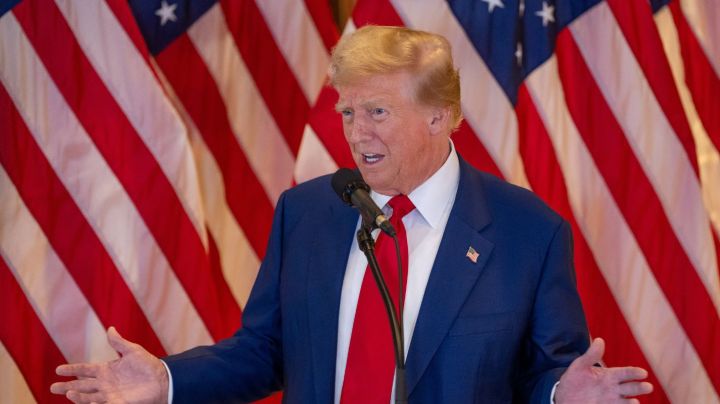
NEW YORK, NEW YORK - MAY 31: Former President and Republican Presidential candidate Donald Trump speaks during a press conference at Trump Tower on May 31, 2024 in New York City. The former president was found guilty on all 34 felony counts of falsifying business records in the first of his criminal cases to go to trial. (Photo by David Dee Delgado/Getty Images)
The Supreme Court has put an end to the question of birthright citizenship. On Tuesday, June 30, the Court upheld the concept of the term that has been applied until now and rejected US President Donald Trump’s executive order looking to ban it. Trump’s executive order declared that children born to people who are in the United States illegally or temporarily are not American citizens.
At its core, the concept of birthright citizenship means that anyone born within the territory of the United States, regardless of parents’ nationality or immigration status, is considered a US citizen. It was established by the Citizenship Clause of the 14th Amendment.
Trump’s executive order had previously been blocked by several lower courts around the country and had not taken effect anywhere in the US.
During arguments in April, which were attended by Trump himself, justices argued back and forth about the interpretation of the 14th Amendment. The President signed the birthright citizenship executive order on the first day of his second term, as the linchpin to his administration’s crackdown on immigration.

This isn’t the first big loss for the administration. The justices also previously denied Trump global tariffs that he’d imposed under an emergency powers law. The Supreme Court is conservative in its majority, but it seems even for the conservative judges, Trump’s executive order went too far.
However, on the final day of ruling for the term, the Court upheld state laws that ban transgender athletes from participating in female sports, struck down limits on how much political parties can spend in coordination with federal candidates, and ruled that the President has the authority to dismiss members of independent government agencies at will.