
Maddy Perez has become bigger than the role she was initially given on Euphoria. Though she was first imagined as more of a side character, Alexa Demie’s audition reportedly reshaped what Maddy could become on Euphoria. That alone says a lot about what Demie has brought to the character. In her hands, Maddy has never felt like a flat Latina stereotype. She is determined, hard working, wounded, calculating, glamorous, and one of the baddest women to ever grace our televisions. She is more than an aesthetic being displayed like a trophy.
For Latina viewers especially, Maddy has become an avatar of glamour and survival. She represents the girl who knows she looks good, knows people underestimate her, and knows confidence can be both armor and performance. Her wardrobe this season has become part of the weekly conversation as she continues to pull from designers like Jean Paul Gaultier, Versace, Prada, Dolce & Gabbana, and more. Every look becomes discourse. Every outfit adds to the mythology. But clothes can only say so much.
Beneath the makeup and archival designer pieces is a character who deserves writing as layered as the performance carrying her.
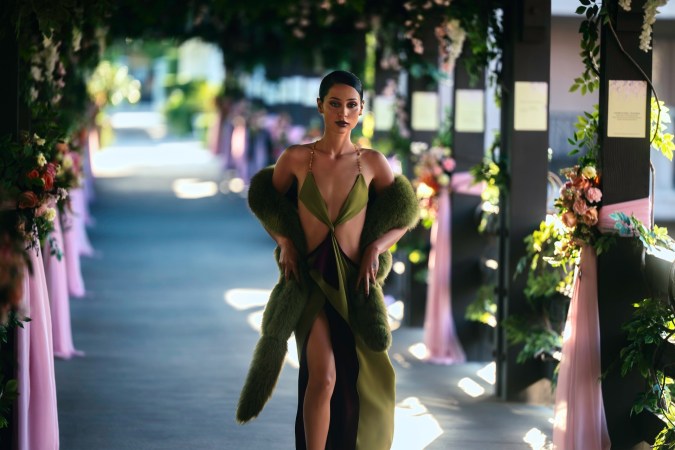
To the show’s credit, Euphoria often nails the texture of Maddy’s Latina identity. It is there in the details: the makeup, the wardrobe, the rosary, the Virgin de Guadalupe shrine, her knowledge of the Bible, and the occasional moments where she speaks Spanish. None of it feels overexplained or forced. It simply exists as part of who she is, which is why she connects so strongly with Latinas watching at home. Maddy feels real because of the way she carries herself as someone who is stylish, guarded, stubborn, sharp, and unwilling to fold even when the odds are against her. She reflects a kind of Latina persistence that does not need to announce itself to be understood.

That authenticity also comes through in the way the show ties Maddy’s confidence to a specific immigrant family reality. In one scene, she says she did not even apply to college, that her parents are immigrants, and that while she knows her generation is seen as entitled, she does not believe anybody owes her anything. She refuses to call herself a victim. The line helps her get the job, but it also reveals something true about how Maddy sees the world. For her, there are no shortcuts and no easy way out. Survival is not romantic; it is daily work. Maddy understands that better than almost anyone on the show, which is why seeing her again after the time jump, still holding her head high in the face of adversity, feels so satisfying. She is not just stylish or intimidating. She is strong because she has had to be.
That is what makes the show’s treatment of her so frustrating. Euphoria understands how to make Maddy feel culturally specific. It understands the look, the attitude, the religious imagery, the humor, the toughness, and the immigrant kid’s refusal to be pitied. But it does not always give that same attention to her interior life. The show knows how to make Maddy iconic, but it still struggles to give her the emotional depth that her authenticity deserves.
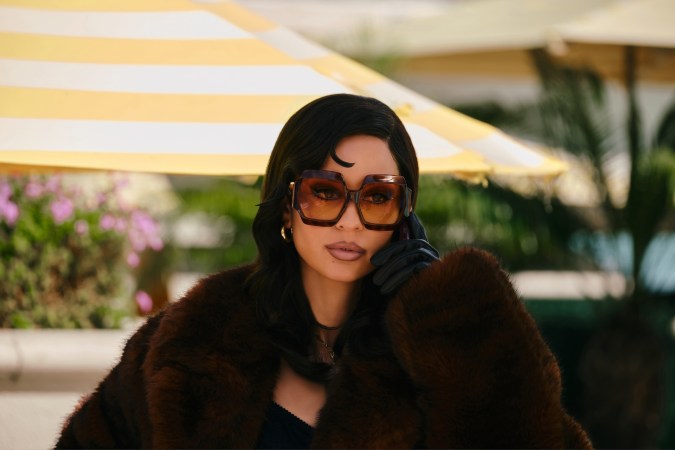
This season, that tension has become even clearer. Online, viewers have repeatedly pointed to Demie as one of the show’s most magnetic performers, even on a series that once earned Zendaya an Emmy. Maddy’s arc has taken her from being framed through Nate Jacobs’ abuse and control to becoming something closer to a modern day madam, helping command a new OnlyFans-style agency alongside Sydney Sweeney’s Cassie. On paper, that should feel like a natural evolution for a character who has always understood power, desirability, and survival. But the show does not always seem sure whether it wants to explore Maddy’s ambition or simply admire how good she looks while surviving.

Demie plays Maddy with presence and authenticity. Maddy comes across as fierce but still delicate, someone who can project confidence even when insecurity is quietly creeping in. At Nate and Cassie’s wedding, that vulnerability slips through. But when she comes face to face with Alamo, it is her confidence that makes him take her seriously and allows her to become a bigger player in the larger Euphoria world.
That’s why Episode 7 feels like such a frustrating downgrade. When Maddy has to ask Alamo for a favor, the scene places her in a bathing suit, inside a hot tub, while he only half takes her seriously. It is writing like this that hurts the character. One of the show’s most dynamic women is suddenly made to feel powerless in a way that is difficult to watch. By the end of the episode, Maddy is indebted to Alamo and backed into a corner, which is an unusual position for a character who has always been cunning, strategic, and aware of how people underestimate her.
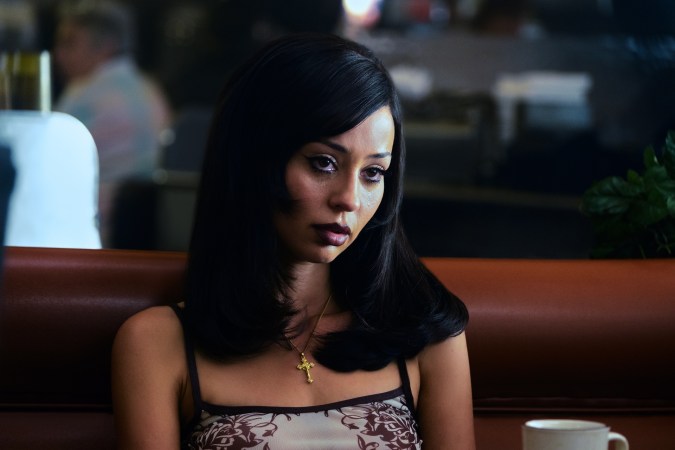
The series finale complicates that even further. After Rue’s death, a time jump reveals that Maddy and Cassie are still working together, running what feels like a Bop House-style operation out of the same house Cassie once shared with Nate. They are managing more girls, collecting money, and still dropping off payments to Alamo. It is a grim full-circle image: two women who once destroyed each other’s trust, now bound together by survival, business, and the same predatory system that keeps taking from them. When Cassie says it is easier if you “pretend to like him,” the line immediately lands with discomfort because it makes clear how much of their so-called power still depends on appeasing a man who uses the terms to his advantage.

That discomfort only deepens when Alamo tells Maddy to sit on his lap and talks about wanting his American dream and children with her. It is a deeply unsettling moment because Maddy, a character built on confidence, calculation, and control, is once again placed in a position where her body becomes part of the negotiation. She is not powerless because she lacks intelligence. She is powerless because the writing keeps putting her in rooms where men hold the leverage.
The finale does give Maddy a kind of grace. Bishop arrives and picks her up, giving her one of the few softer connections she has had all season. For a character who has spent so much of the season surrounded by people who either use her, underestimate her, or want something from her, Bishop’s presence feels like a small breath of relief. He sees her differently, and for a moment, Maddy is not performing toughness for survival. She is simply being met with care.
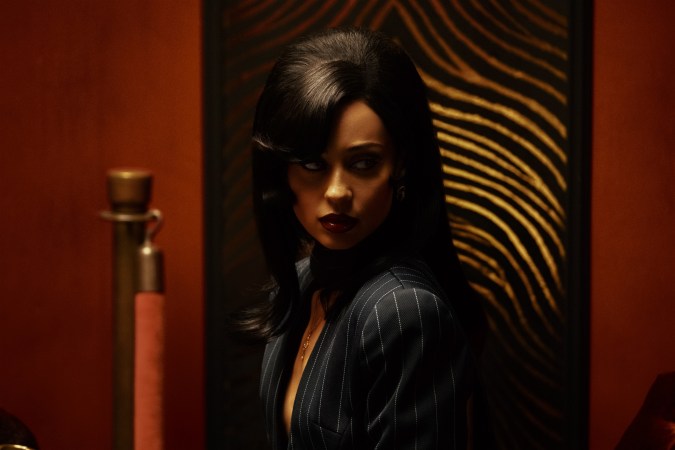
That grace becomes literal when Ali storms into the Silver Slipper looking for Alamo. During the standoff, Alamo uses Maddy as a human shield, turning her once again into collateral in someone else’s war. But when Alamo is finally killed, after Bishop has removed the bullets from his pistol, it feels like the answer to the grace Maddy had been searching for earlier. Alamo is dead. Rue is avenged. Maddy is finally free from the private hell that had trapped her.
But that is also what makes the ending so frustrating. Maddy is saved, but she is not the one who saves herself.
Instead of watching Maddy step further into her power, it can feel like we are watching the reverse of a character trajectory. After surviving Nate and the very public betrayal of someone she once called her best friend, twice, Maddy should not have to be reduced to another pitiful victim. Throughout this season, she remains a hustler and a fighter, as she has always been. But too often, the show treats her like eye candy waiting to be taken advantage of, rather than a woman whose interior life deserves as much attention as her wardrobe. Even in the finale, her freedom comes through Bishop and Ali’s intervention, not through her own agency.
And maybe that is why Maddy remains so compelling. Alexa Demie makes her feel deeper than the writing sometimes allows her to be. She can communicate confidence, hurt, boredom, calculation, fear, and desire with a look. Her silence is never empty. Her presence is loud. But presence should not have to substitute for character development. The finale may have freed Maddy from Alamo, but it did not fully free her from the show’s worst habit: turning her into an icon before letting her be a person. If Euphoria understands why audiences are obsessed with Maddy Perez, then it should also understand that she deserved more than aesthetic power. Still, Maddy Perez will always be a Latina icon, not because Euphoria always knew what to do with her, but because Alexa Demie made sure we could never look away.