
In the summer of 2020 skateboarding officially debuted at the Tokyo Olympics, marking the institutional embrace of a once outsider subculture that was previously met with skepticism by the sports establishment. A year prior, on the other side of the hemisphere a group of young women from Cochabamba, Bolivia began forming the Imilla Skate crew to represent Quechua women skateboarders.
Their presence garnered recognition for its cultural pride within a skate scene traditionally dominated by images of the white male SoCal skater archetype clad in oversized tees, baggy jeans, and Vans shoes. Against this backdrop, Imilla Skate is subverting norms of assimilation and challenging expectations about who and what image gets to be included in skate and the broader sports landscape.
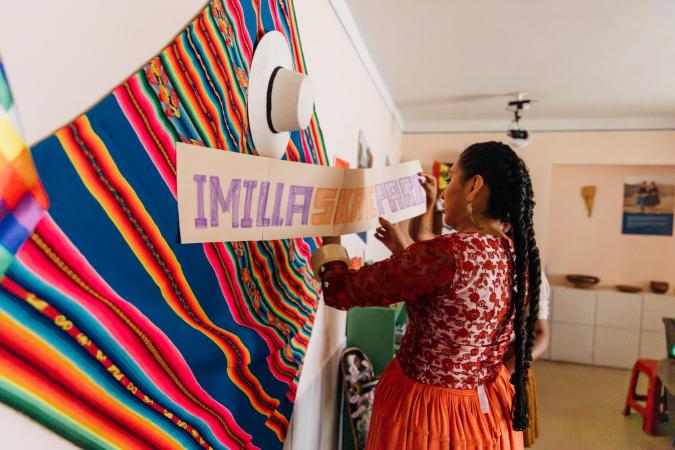
“At first we each had separate groups because we all started at different times,” shares Elinor Buitrago, president of Imilla Skate crew. “Eventually we came together to discuss creating a collective because at that time, the movement among guys in skating had increased a ton, while for girls there wasn’t much visible growth. So when deciding our name to reflect who we are and wanted to represent, we chose Imilla because it means young girl or young woman in both Quechua and Aymara. It’s a term of endearment that we’d hear when people encouraged our skating. This is how the group started coming together,” Buitrago adds.
Traversing rural and urban centers, Cholitas are recognizable by their refined layered skirts (polleras), adorned braids, embroidered blouses, tasseled shawls and sombreros vallunos, commonly worn throughout Bolivia’s valley regions. They’ve historically occupied a complex position within Bolivian society. Once stigmatized and discriminated against due to associations with Indigeneity and lower social class, over the past couple decades their dress and identity have become symbols of aesthetic pride alongside resilience amid Cholitas’ growing representation in politics, professional industries, and upward economic mobility.

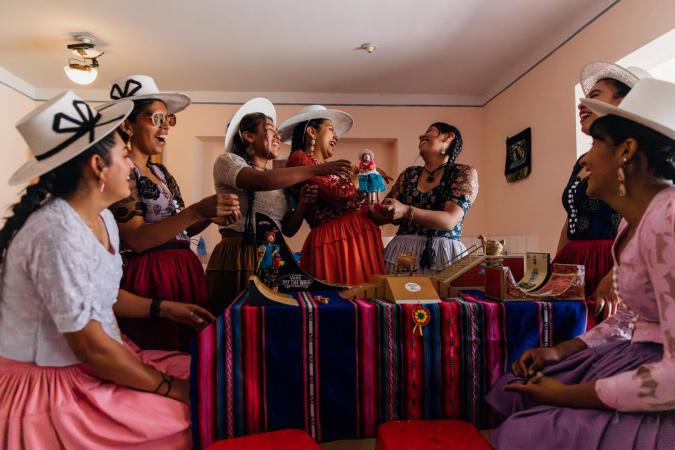
As the daughters and granddaughters of Cholitas, Imilla Skaters often stylize their attire to reflect their personalities and comfort while skating yet still honor the tradition of Cholita wear. Some opt for metal or goth-inspired black looks influenced by fusion Andean rap and rock, accessorized with chunky necklaces and bold earrings paired with trendy sunglasses. Others incorporate nods to the U.S. skate aesthetic by pairing their polleras with crew socks and classic Vans shoes.
“Certain skaters prefer shorter polleras, others a bit longer. I like to wear mine with about three underlayers because when skating I don’t like the skirt to be too voluminous, but I don’t like it to look completely flat either. I have my regular casera (vendor) who I buy my polleras from and she’s always advising me on how to accessorize based on current trends like, ‘You should wear this,’ or ‘wear it with that,’ they’re very supportive,” Buitrago enthuses.
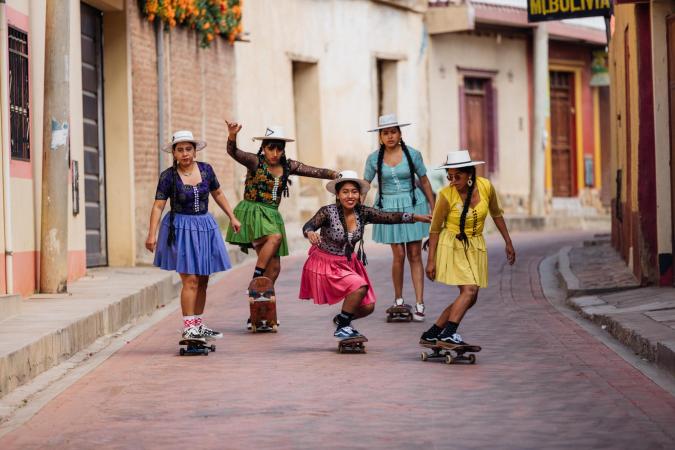
During a poignant scene from Imilla Skate’s recent Webby Award-winning and 2026 Sports Emmy-nominated Outstanding Feature: Long Form documentary co-produced by Optimist and Pachamama Sabia, they peruse the markets while chatting with older generation Cholita vendors and even manage to convince a few to give skating a try, gently hoisting them onto boards to regally roll through the market aisles.
The documentary weaves in vignettes like this to reach beyond the visual intrigue that first drew attention among Imilla Skate’s 126,000 Instagram followers, focusing on the day-to-day intimacy and fortitude found within intergenerational girlhood, womanhood, motherhood, friendship, and how those relationships sustain one another through the platform they’ve built.
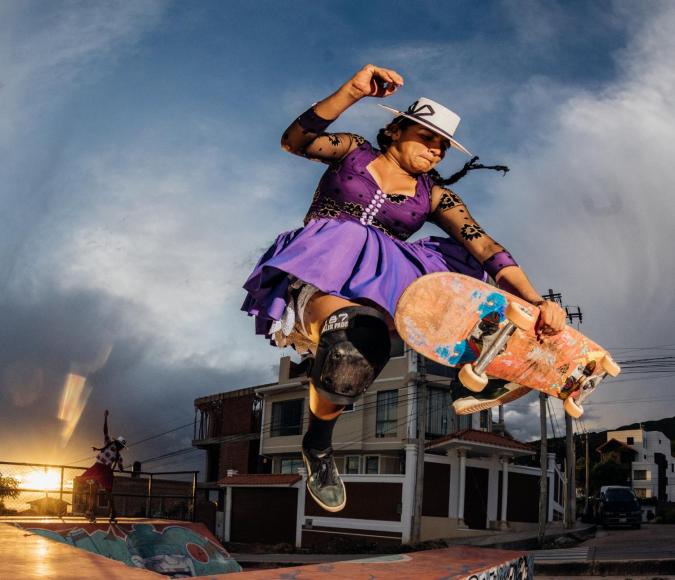
“We highlighted them as the Cholita skaters who promote sports and empower women, but also as women with everyday lives to show a universal connection other women can relate to. Such as, when Eli talks about being a mother and how that changes your perspective, many women can identify with that. In watching the film they may recognize the possibility that different parts of themselves can coexist like, ‘Oh, I can be a mother and skate as well.’ when touching on those aspects we explore the multiplicity of what it means to be modern, athletic, entrepreneurial Indigenous women,” says Natalie Conneely, Executive Producer of the Imilla Skate documentary.
Anchored within their practice is profound reciprocity tied to spiritual tradition, as the skaters gather for a ceremonial offering to Pachamama (Mother Earth) in gratitude for their newly established headquarters, grounding the milestone within the community values that helped transform Imilla Skate from a skate crew to a collective, and now an organization–allowing them to broaden their work with vulnerable youth throughout Cochabamba while expanding nationally and abroad.
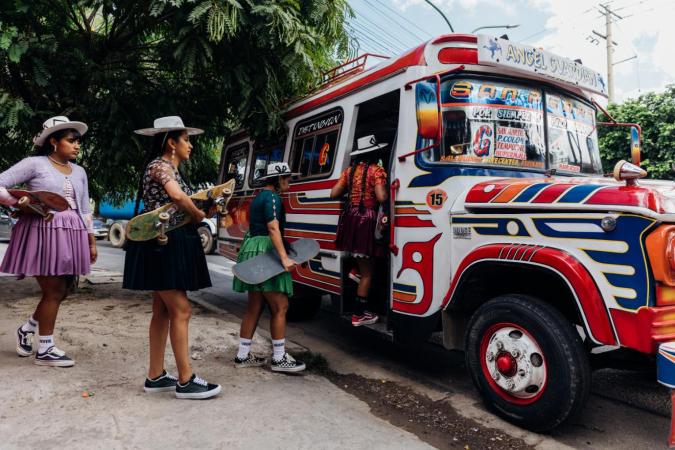
Throughout the organization’s travels where they’ve led workshops and participated in competitions, Imilla Skate found commonality with communities navigating their own intertwined relationships to ancestral preservation and reconnection, with skateboarding serving as a conduit for cross-cultural discussions and self-affirmation via learning, landing tricks, falling, and mutual encouragement to try again.
“The best part about skate competitions is proving that you can overcome challenges, because the nerves are always there but they also help you find better focus,” Buitrago recalls. “The most beautiful aspect whether it’s street, bowl, or ramp skating is being able to share with women skate communities from all regions and to feel their support–even when we compete against one another there’s a sense of unity” the Imilla Skater emphasizes.
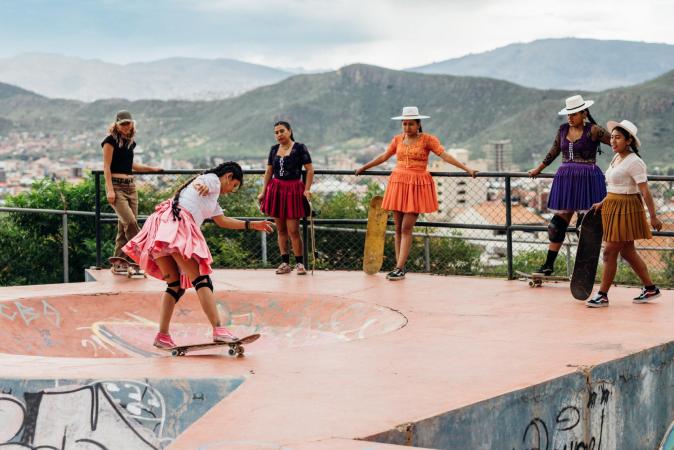
Ultimately, seeing an Indigenous Bolivian skater or skate crew represented on a competitive platform as large as the Olympics would be monumental but Imilla Skate’s loftier aspiration, which they are currently raising funds for, is the construction of an Olympic-style skatepark within Bolivia.
Should the Olympics ever be hosted in the country, the park would already be established and capable of facilitating the competition, cultural exchange, and sportsmanship the games are known for. It would also create a space where intergenerational communities throughout Bolivia and across the globe could regularly skate, train, or cultivate future generations of internationally competitive skaters.
Toward that future, the ImillaSkate organization is cementing Indigenous women as a mainstay across skateboarding and athletics while continuing to reshape perceptions of who belongs within the sport and what representation can look like as skateboarding continues evolving through its Olympic inclusion.
Note: Quotes are translated from Spanish and edited for clarity.